Blogs
Stay updated with our latest blog posts.


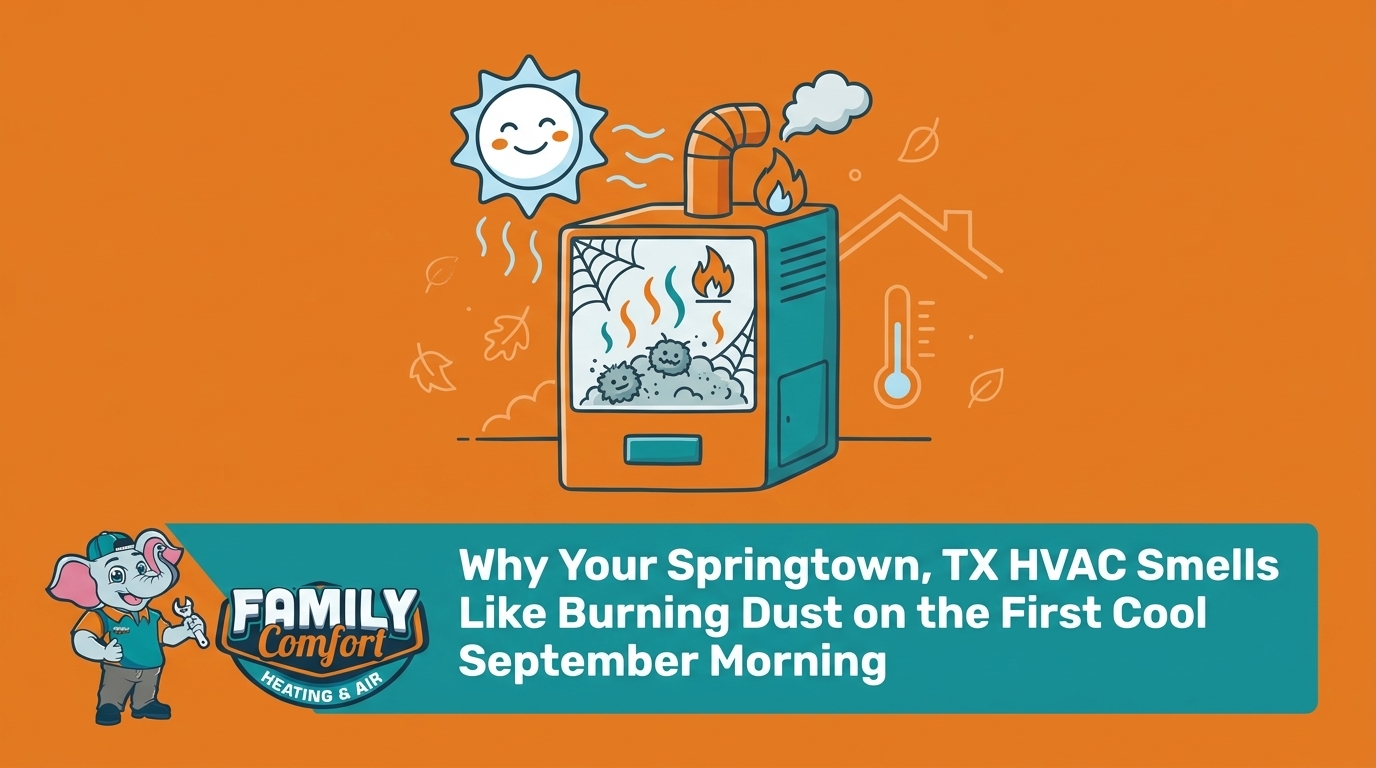
The transition from relentless summer heat to autumn chill in North Texas usually happens almost overnight. A sudden temperature drop arrives, prompting you to finally switch your thermostat from cooling to heating. If you are wondering why your Springtown HVAC smells like burning dust on the first cool September morning, you are certainly not alone. At Family Comfort Heating & Air, our team fields countless calls every autumn from panicked homeowners experiencing that distinct, alarming odor pouring out of their vents.
Within minutes of the heating cycle starting, a strong, singed scent often fills the living room. Your immediate thought is likely a worst-case scenario: a fire in the attic or a catastrophic mechanical failure. The anxiety is completely understandable. When you smell smoke or burning in your own home, your instincts tell you to shut everything down and evacuate.
However, this specific moment creates a critical decision point for homeowners. You need to determine whether this is a normal, harmless seasonal burn-off or a serious electrical hazard that requires immediate intervention. The good news is that in the vast majority of cases our technicians see in the field, this harsh smell is a temporary and entirely normal process. Understanding exactly what is happening inside your system can provide immense peace of mind. If you are ever in doubt, relying on professional heating services is the safest route to ensure your home remains comfortable and secure as the seasons change.
To understand why your heater produces such a startling odor in the fall, we have to look at what it was doing during the summer. The short answer is: absolutely nothing. While your air conditioning components were working overtime to combat the intense North Texas heat, the heating components inside your furnace sat completely idle for months.
The Reality of the North Texas Climate
In our years of servicing homes across Boyd, Springtown, and the surrounding areas, we see firsthand what our region's prolonged, intense heat and notoriously dry conditions do to local HVAC systems. These dry months create an environment with excessive particulate matter in the air. Dust, pollen, pet dander, and dry soil particles constantly circulate through the atmosphere. Because many local HVAC systems are installed in attics or hallway closets, they are situated in prime locations for this airborne debris to settle.
Where the Dust Collects
Even if you are diligent about changing your air filters, standard filters are designed to catch dust while the air is actively circulating. They cannot prevent the slow, steady settling of micro-particles inside the unit itself during months of inactivity.
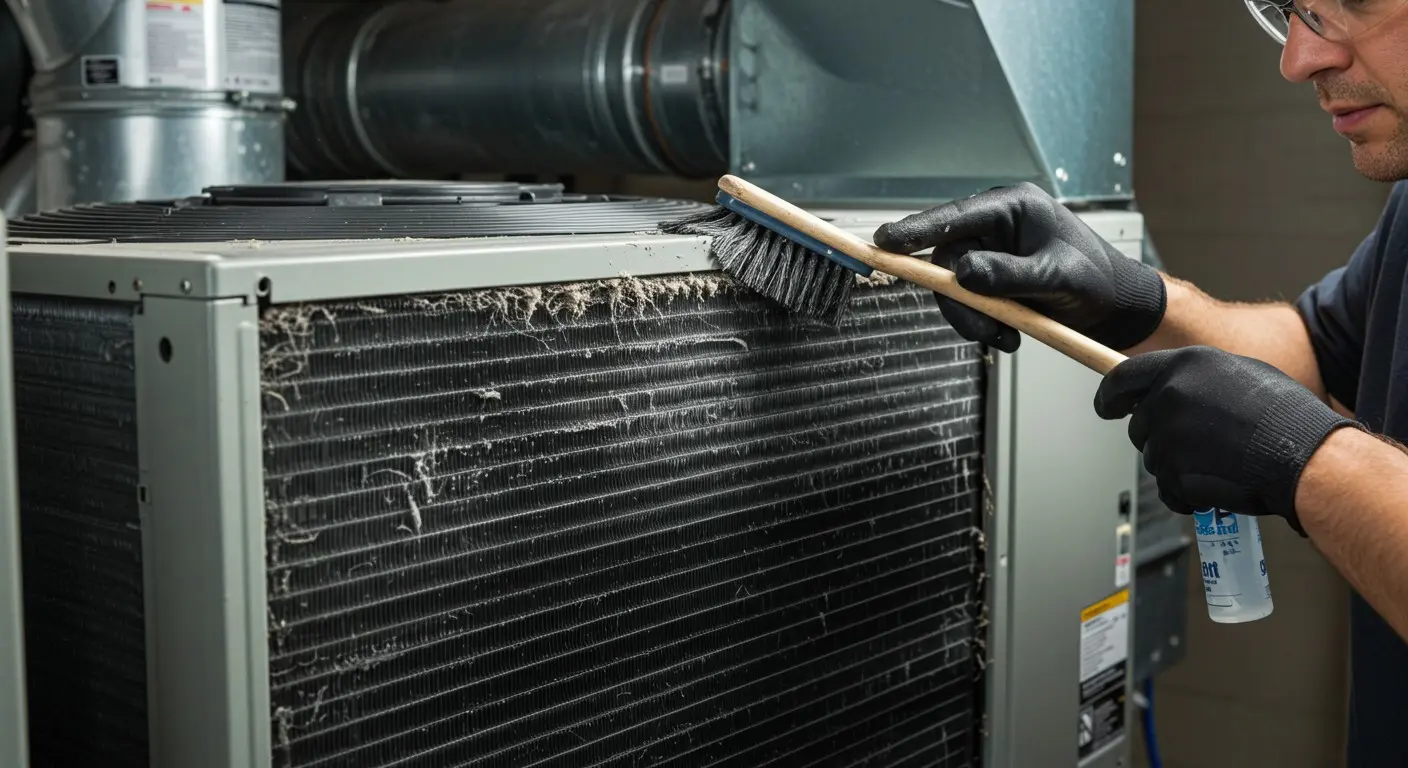
• The Heat Exchanger: This is the primary collection point. The heat exchanger is a large metal component responsible for transferring heat into the air that blows through your home. Because it sits cold and unused all summer, dust settles directly onto its surface.
• The Burners: In gas furnaces, the burner assemblies also collect a fine layer of summer dust and debris.
• The Blower Motor Housing: While the blower runs during AC season, the external casing of the heating compartments remains a magnet for static dust buildup.
The Core Problem
By the time that first cool September morning arrives, your heat exchanger is essentially wearing a blanket of dry, settled dust. The system is mechanically sound, but it is dirty from months of seasonal hibernation. This buildup sets the stage for the dramatic sensory experience that occurs the very first time you call for heat.
When you finally adjust the thermostat to combat the morning chill, you initiate a rapid sequence of mechanical events. This activation sequence is what transforms months of settled dust into that alarming smell spreading through your home.
Here is the exact step-by-step process of what happens inside your system:
1. The Thermostat Call: You set the thermostat to heating mode. The thermostat sends an electronic signal to the furnace control board, demanding a temperature increase.
2. The Ignition Sequence: The draft inducer motor starts, clearing residual gases. Then, the igniter glows red hot, and the gas valve opens (in gas furnaces) or the electric heating elements energize (in electric furnaces).
3. Rapid Temperature Spike: The heat exchanger rapidly heats up, quickly reaching operational temperatures that typically range between 130 and 170 degrees Fahrenheit. This intense, sudden heat is necessary to warm the air circulating through your home.
4. The Incineration Phase: As the metal surface of the heat exchanger reaches these high temperatures, the blanket of accumulated summer dust has nowhere to go. It is immediately incinerated upon contact with the hot metal. This flash-burning of organic particulate matter creates a distinct, smoky odor.
5. The Distribution: Moments later, the main blower fan engages. Its job is to push air over the hot heat exchanger and distribute that warmth throughout the house. Unfortunately, it also pushes the freshly singed dust smell directly into your ductwork and out of every supply vent in your living spaces.
This sequence explains why the smell is so potent and widespread. It is a completely normal mechanical process, not a malfunction. However, if this process causes the system to shut down unexpectedly or fail to produce heat, you may need targeted heating repair in Springtown to address underlying ignition or airflow issues.
Knowing that the burning dust smell is a normal part of the seasonal transition is helpful, but you still need a baseline to monitor the situation. You should not have to endure a foul-smelling home for days on end. Our technicians at Family Comfort Heating & Air rely on the "30-Minute Rule" to help homeowners gauge whether their system is operating safely.
The Typical Timeline for Dust Burn-Off
• Minutes 1 to 5: The odor will be at its absolute strongest. This is when the initial flash-burn of the heaviest dust layer occurs. The smell will actively pump through the vents.
• Minutes 10 to 20: The intensity of the smell should noticeably peak and begin to taper off. The bulk of the dust has been incinerated, and the fresh air circulating through the return vents is starting to dilute the odor.
• Minutes 20 to 30: The burning smell should be rapidly dissipating. You might catch a faint whiff if you stand directly over a vent, but the ambient room odor should be mostly gone.
Actionable Ventilation Tips
To make this initial burn-off period more comfortable, we highly recommend opening a few windows and turning on ceiling fans before you trigger that first heating cycle of the year. Cross-ventilation helps clear the singed air out of your home much faster, usually resolving the odor issue well within the 30-minute window.
When the Timeline Fails
If the smell persists unchanged after 45 to 60 minutes of continuous operation, the 30-minute rule has been broken. At this point, the odor is no longer just settled dust burning off. You should immediately turn the unit off at the thermostat. Persistent odors indicate a deeper issue, such as a failing motor, an electrical short, or a severe airflow restriction. Scheduling professional furnace maintenance before the season begins is the best way to clean the heat exchanger in advance and minimize this disruptive timeframe entirely.
Equipping yourself with the knowledge to distinguish between harmless dust and a true emergency is vital. Having responded to countless emergency heating calls across North Texas, our technicians at Family Comfort Heating & Air know that your nose is one of the best diagnostic tools you have. We are committed to being the calm, local voice of reason that helps homeowners navigate these stressful sensory checks safely. By paying close attention to the specific characteristics of the smell, you can easily determine your next steps.
A safe, seasonal burn-off has a very specific scent profile. It usually smells like singed hair, dry earth, or hot metal. It is certainly unpleasant, but it lacks the sharp, chemical bite of a synthetic fire. Furthermore, a normal burn-off will fade within 30 minutes and will never be accompanied by visible smoke in your living space or unusual, violent noises from the utility closet or attic.
An electrical emergency smells entirely different. If you detect the acrid scent of melting plastic, burning rubber, or a sharp, metallic ozone smell, you are dealing with a severe hazard. This type of odor will usually intensify over time instead of fading. It is often accompanied by physical warning signs, such as audible sparking, loud popping sounds, a visible smoky haze near the vents, or the system rapidly short-cycling (turning on and off continuously every few minutes).
Comparing the Symptoms
• Odor Profile — Normal Seasonal Burn-Off: Hot dust, singed hair, dry earth — Dangerous Electrical Hazard: Melting plastic, burning wire, ozone
• Duration — Normal Seasonal Burn-Off: Fades quickly within 20 to 30 minutes — Dangerous Electrical Hazard: Persists or worsens after 45+ minutes
• Visual Cues — Normal Seasonal Burn-Off: None; air remains clear — Dangerous Electrical Hazard: Visible smoke or haze near vents/unit
• Auditory Cues — Normal Seasonal Burn-Off: Normal blower and burner sounds — Dangerous Electrical Hazard: Loud popping, sparking, or grinding
If your sensory check points toward an electrical emergency, the rules change immediately. Electrical smells mean the system must be shut off instantly at the thermostat. Do not wait to see if it improves. Getting routine heating maintenance is critical to catching these dangerous electrical faults—like frayed wires or failing capacitors—before they have a chance to ignite.

If your heating system fails the 30-minute rule or exhibits any of the dangerous sensory signs outlined above, you need to take immediate, safe action. Handling a malfunctioning furnace requires caution. When our technicians arrive at a home with a persistent burning smell, these are the exact non-DIY safety protocols we wish every homeowner had followed before we got there.
1. Step 1: Turn the heating system off immediately. Walk directly to your thermostat and switch the system from "Heat" to "Off." Do not simply lower the temperature setting; ensure the entire system is commanded to shut down. This stops the flow of gas or electricity to the heating elements.
2. Step 2: Check and replace the air filter. Once the system is off, locate your return air filter. A severely clogged, dirty filter severely restricts airflow, which can cause the furnace's internal components to rapidly overheat and produce a burning smell. If the filter is dark gray and caked with dust, replace it with a fresh one.
3. Step 3: Keep the furnace cabinet closed. Do not attempt to open the furnace cabinet, remove access panels, or diagnose electrical faults yourself. Modern HVAC systems contain high-voltage components, complex circuit boards, and combustible gas lines. Poking around inside the unit without proper training is incredibly dangerous and requires a licensed professional.
4. Step 4: Contact a local HVAC technician. Call a certified professional to perform a comprehensive diagnostic inspection. They will safely evaluate the heat exchanger for cracks, test the blower motor for overheating, and verify that all electrical connections are secure and free of shorts.
Taking these steps ensures your family's safety while protecting your equipment from further damage. To prevent these stressful situations from occurring in the first place, we highly recommend following a comprehensive fall HVAC checklist to prepare your system long before the cold weather actually hits.
Experiencing a brief burning dust smell on that first cool September morning is a normal rite of passage for homeowners in our area. The long summer months inevitably lead to dust settling on idle heating components, and the initial start-up is bound to incinerate that buildup. As a local team that has guided countless families through this seasonal transition, we want you to approach that first chilly morning with confidence rather than panic.
Always remember the 30-minute rule: a safe dust burn-off will dissipate quickly. Trust your senses. If the odor smells like melting plastic, is accompanied by strange noises, or persists well past an hour, it is time to take action. If the smell lingers, or if you simply want the peace of mind that comes with knowing your system is clean, safe, and ready for winter, do not hesitate to schedule a professional inspection with our team today.
Why does my heater smell like it's burning?
Your heater smells like it is burning because dust and airborne particles settle on the heat exchanger during the idle summer months. When you turn the heater on for the first time, those high operating temperatures instantly incinerate the accumulated dust. The blower fan then pushes that singed air through your vents, creating a temporary burning odor throughout the house.
Is it normal for a heater to smell like burning dust?
Yes, it is completely normal for a heater to smell like burning dust during its first few cycles of the fall season. Because the heating components sit unused for months, dust accumulation is unavoidable, even in clean homes. As long as the smell resembles hot, dry dust and fades relatively quickly, it is a harmless mechanical process.
How long does the burning smell last when you turn on the heater?
The burning dust smell should typically last between 20 and 30 minutes. The odor will be strongest during the first five minutes of operation and will steadily taper off as the dust finishes burning away. If the smell remains strong and unchanged after 45 to 60 minutes, you should turn the system off and investigate further.
Can a dusty heater catch on fire?
While a standard layer of household dust burning off the heat exchanger is not a fire hazard, extreme neglect can be dangerous. If a furnace is heavily clogged with debris, or if a severely dirty air filter restricts airflow to the point of severe overheating, it can damage internal components or create a localized hazard. Regular maintenance prevents dust buildup from reaching dangerous levels.
What does an electrical fire in an HVAC system smell like?
An electrical fire in an HVAC system smells sharply of melting plastic, burning rubber, hot wire insulation, or ozone. Unlike the smell of burning dust, an electrical odor is acrid, chemical, and tends to grow stronger the longer the system runs. If you detect this specific smell, shut off the system at the thermostat immediately.
Should I open windows when turning on the heater for the first time?
Yes, opening a few windows when turning on the heater for the first time is a highly recommended practice. Creating cross-ventilation helps flush the singed, dusty air out of your home much faster. Once the 20 to 30-minute burn-off period is complete and the air smells fresh, you can close the windows and enjoy the warmth.


Stay comfy with 0% Financing for 12 Months on a new HVAC system through Synchrony and Wisetack! No hidden fees, no stress—just easy payments.