Blogs
Stay updated with our latest blog posts.


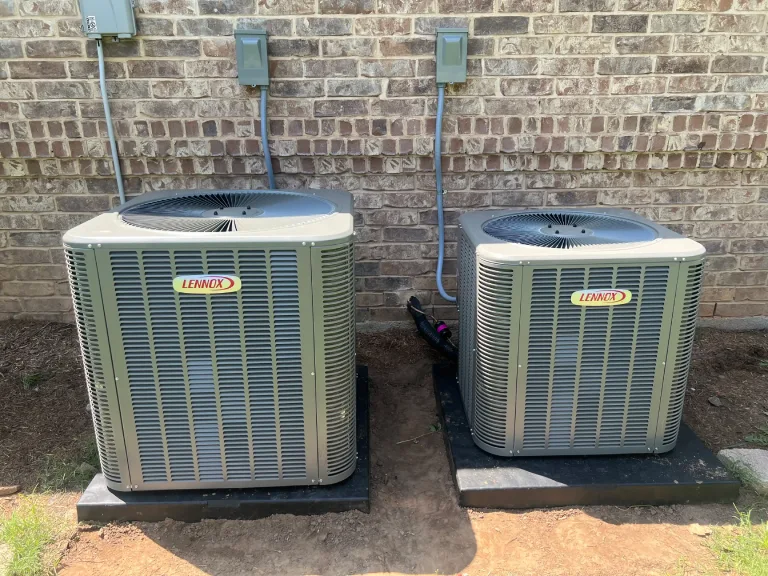
How confident are you in your strategy for protecting outdoor hvac units from freezing rain when temperatures suddenly plummet? Many homeowners understand how to prepare their plumbing for a freeze, but the mechanical equipment sitting outside often gets overlooked until a severe weather event hits. When the forecast calls for precipitation alongside a sharp temperature drop, the threat to your outdoor condenser changes dramatically. There is a massive mechanical difference between a light dusting of dry snow and the heavy, solid ice glazing that coats metal surfaces during a severe winter storm.
For residents in Boyd, TX and surrounding North Texas areas, these sudden temperature plunges are a known reality. The core decision you will face during one of these events is knowing when to trust your system's built-in automatic defenses and when to manually shut off the power to prevent catastrophic mechanical failure. Making the wrong choice can lead to a destroyed fan motor, a ruptured coil, or a burned-out compressor. For reliable heating services, understanding your equipment's mechanical limits is the first step toward winter readiness.
To properly defend your equipment, you must first understand the physics of what happens when supercooled rain hits cold metal. Generic winterization advice often focuses on fluffy snow, which is common in northern climates. However, that advice completely misses the specific mechanics of the heavy, solid ice glazing typical of late fall and winter sudden freezes in Texas. When freezing rain coats an outdoor unit, it does not just sit on top; it bonds directly to the aluminum fins, the fan blades, and the protective grate.
This solid ice accumulation triggers a chain reaction of mechanical problems. The primary issue is airflow restriction. Your outdoor unit relies on pulling vast amounts of air through those thin metal fins to transfer heat. When ice bridges the gaps between the fins, it acts as a highly effective thermal insulator. The system can no longer absorb or release heat efficiently, forcing the compressor to work exponentially harder to achieve the same result. This extreme strain is why proactive AC maintenance before the winter season is so critical.
• Physical bonding: Dry snow rests lightly on surfaces and can often be gently brushed away with a broom. Freezing rain bonds molecularly to the metal fins, making it impossible to remove without causing damage.
• Thermal insulation: Snow contains trapped air and allows some minimal thermal exchange. Solid clear ice forms a dense, impenetrable barrier that completely halts the coil's ability to transfer thermal energy.
• Weight load: Ice is significantly heavier than snow, putting immense downward pressure on the structural housing of the condenser unit.
The most immediate danger of freezing rain involves the large fan sitting at the top of the unit. When freezing rain is blown sideways into the unit, it often coats one side of the fan blades more heavily than the other. This creates a severe centrifugal imbalance.
The mechanical consequence: Even a few ounces of asymmetrical ice on a fan blade spinning at hundreds of revolutions per minute causes violent vibrations. This prolonged vibration tears apart the motor's internal bearings and weakens the structural mounts holding the fan assembly in place. If the ice accumulation is thick enough, the spinning blades may even strike the surrounding ice shroud, shattering the blades entirely and destroying the motor.
One of the most dangerous mistakes a homeowner can make is treating an active heat pump exactly like a dormant air conditioner. Because the outdoor units look nearly identical, the internet is filled with generic advice telling people to "cover their unit" for the winter. In Boyd, TX and surrounding North Texas areas, applying this advice to the wrong type of system guarantees a catastrophic breakdown.
An air conditioning condenser sits completely idle during the winter months. It does not run, it does not need airflow, and it is generally safe to cover with a breathable material to keep out falling leaves and freezing rain, provided moisture is not trapped inside. A heat pump, however, is your primary source of warmth. It must run actively throughout the winter to extract ambient heat from the outdoor air and move it inside your home.
• Winter Operation — Idle Air Conditioner: Completely dormant; power is often turned off at the disconnect. — Active Heat Pump: Runs continuously to heat the home.
• Airflow Requirements — Idle Air Conditioner: None during the winter months. — Active Heat Pump: Requires massive, unrestricted airflow to function.
• Covering Safety — Idle Air Conditioner: Safe to cover with a breathable, specialized condenser cover. — Active Heat Pump: NEVER COVER. Covering will suffocate the system and destroy the compressor.
• Ice Management — Idle Air Conditioner: Relies on covers or structural shelters to keep freezing rain out. — Active Heat Pump: Relies on a built-in automatic defrost cycle to melt ice away.
If you cover an active heat pump systems outdoor unit, you are cutting off its "oxygen." The system will desperately try to pull air through the heavy cover, resulting in extreme mechanical stress, overheating, and rapid compressor death.

If you own a heat pump, you do not need to panic at the first sign of frost. Modern systems are engineered to defend themselves against light ice accumulation through a highly sophisticated mechanical process called the defrost cycle. During late fall and winter sudden freezes, this cycle is your equipment's primary line of defense.
Delivering an objective, technical breakdown of this cycle is important because homeowners often mistake a normally operating defrost cycle for a broken or burning machine. The system is designed to temporarily sacrifice a small amount of indoor heating efficiency to save the outdoor equipment from being crushed by ice.
1. Detection: Specialized sensors located on the outdoor coil detect frost buildup, or the system operates on a strict time-and-temperature threshold (e.g., checking for ice every 60 minutes of run time when temperatures are below freezing).
2. Reversal: The system's reversing valve physically shifts. This temporarily turns the outdoor unit into the hot condenser and the indoor unit into the cold evaporator—essentially switching into air conditioning mode for a few minutes.
3. Fan Shutdown: The outdoor fan intentionally stops spinning. This prevents freezing winter air from blowing across the coils, allowing the intense heat from the compressed refrigerant to build up rapidly inside the metal housing.
4. Melting and Steam: As the hot coils melt the frost, a large plume of visible steam will often rise from the top of the unit. This is a sign the system is working perfectly, not a sign of smoke or electrical fire.
5. Drainage: The melted ice cascades down the fins and pools at the base of the unit. Proper drainage is critical here; if the base pan is clogged with autumn leaves, that water will instantly refreeze into a solid block of ice around the bottom of the coil.
6. Resumption: Once the sensors detect that the coil has reached a safe, ice-free temperature, the reversing valve shifts back, the fan kicks on, and normal heating operation resumes.
While the automatic defrost cycle is incredibly effective against frost and light snow, it has mechanical limitations. During severe ice storms in Boyd, TX and surrounding North Texas areas, continuous freezing rain can accumulate faster than the defrost cycle can melt it. Knowing when the system is overwhelmed is critical to preventing permanent damage.
You must rely on visual cues to determine if manual intervention is necessary. If you see solid ice bridging completely across the metal guard, or if the fan blades are entirely encased in a block of ice and struggling to turn, the defrost cycle has lost the battle. Operating the system in this state will quickly burn out the fan motor or cause a catastrophic compressor failure.
The safe shutdown procedure: Go to your indoor thermostat and switch the system from "Heat" to "Emergency Heat" or "Auxiliary Heat." This setting completely disables the outdoor heat pump and relies solely on the secondary indoor heating elements (usually electric heat strips or a gas furnace) to warm your home. Completing a thorough fall HVAC checklist ensures these backup heating elements are ready to take over when you need them most.
Crucial Warning: Never use sharp objects, screwdrivers, or ice picks to manually chip ice away from the outdoor unit. The aluminum fins and copper refrigerant lines are incredibly fragile and easily punctured. Furthermore, never pour hot water over the frozen unit, as the extreme thermal shock can warp and crack the frozen metal components.
The best time to protect your outdoor equipment is long before the freezing rain arrives. Implementing proactive readiness strategies during late fall and winter sudden freezes ensures your system has the best possible chance of surviving severe weather without mechanical failure. By focusing on airflow and environmental management, you can drastically reduce the ice load your system has to fight.
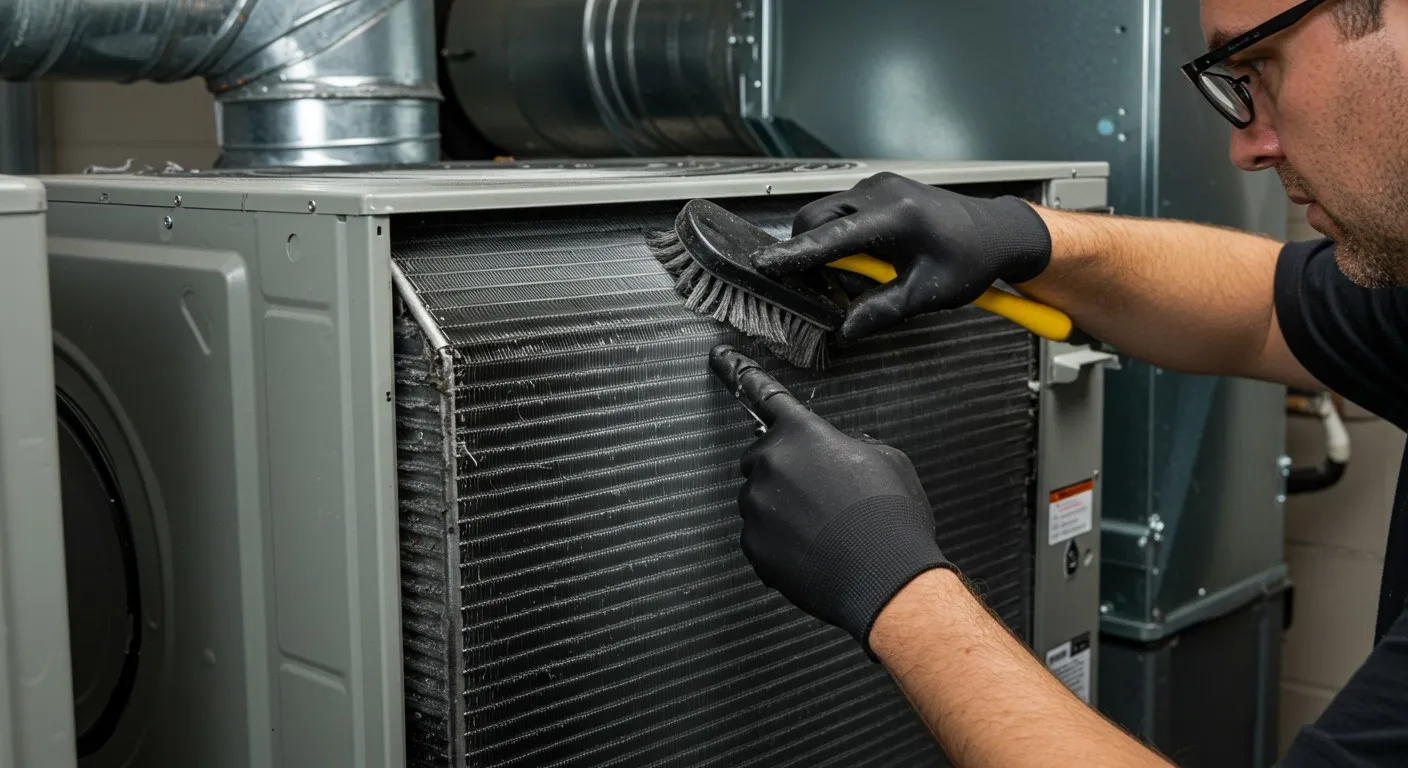
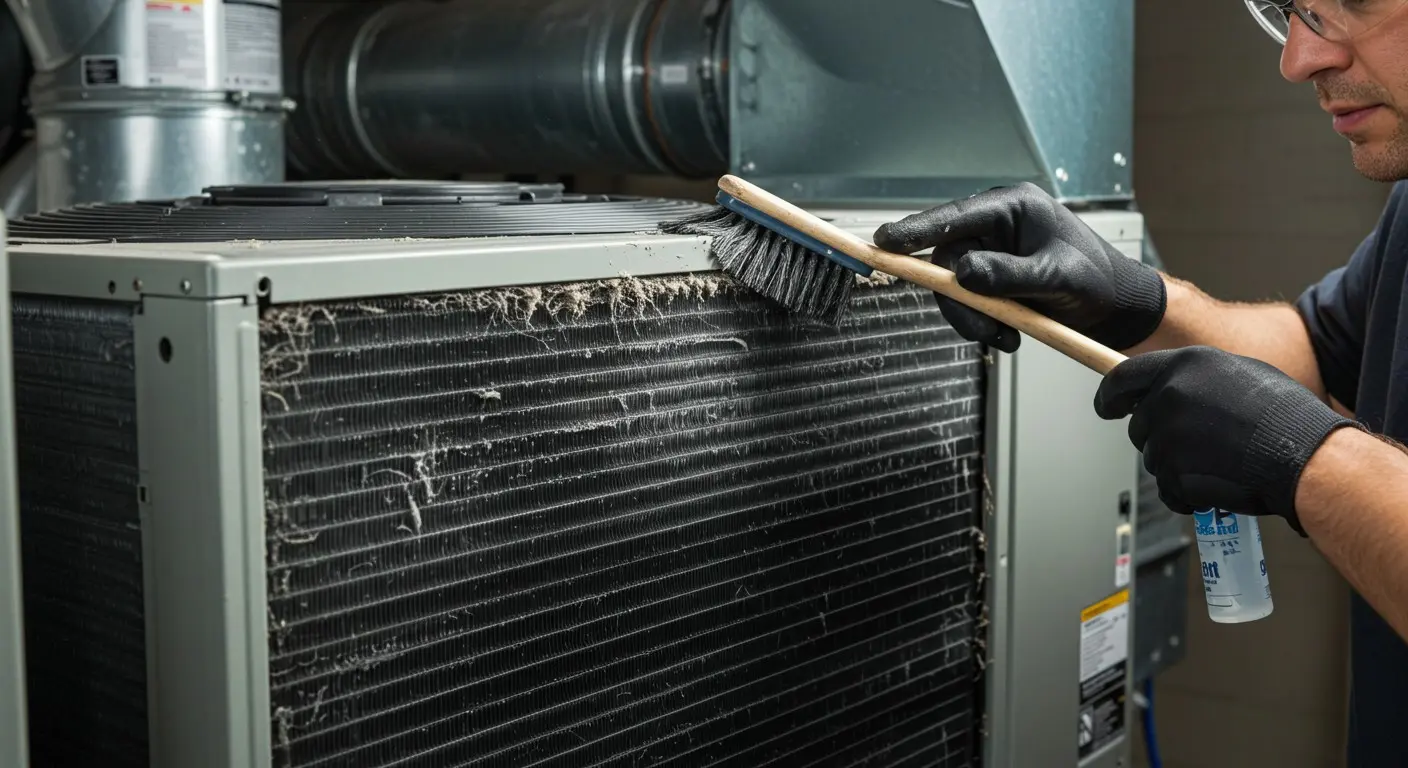
• Clear a 24-inch perimeter: Ensure that all shrubs, tall grasses, and debris are cleared at least two feet away from all sides of the outdoor unit. This guarantees the system has optimal airflow and prevents drifting snow or ice from forming a bridge between the landscaping and the condenser.
• Inspect overhead drainage: Look at the gutters and rooflines directly above your HVAC unit. If a gutter is overflowing or leaking directly onto the condenser, it will encase the unit in solid ice during a freeze. Reroute downspouts and clean gutters before winter hits.
• Consider structural shelters: Instead of wrapping a heat pump in a dangerous cover, consider building a structurally sound awning or overhead windbreak. This structure must be built with proper high clearances (usually 4 to 5 feet above the unit) to block falling freezing rain while allowing unrestricted lateral airflow.
• Elevate the unit: If your area is prone to heavy accumulation, ensure the unit is mounted on "snow legs" or a raised concrete pad to keep the base pan above the freezing water runoff line.
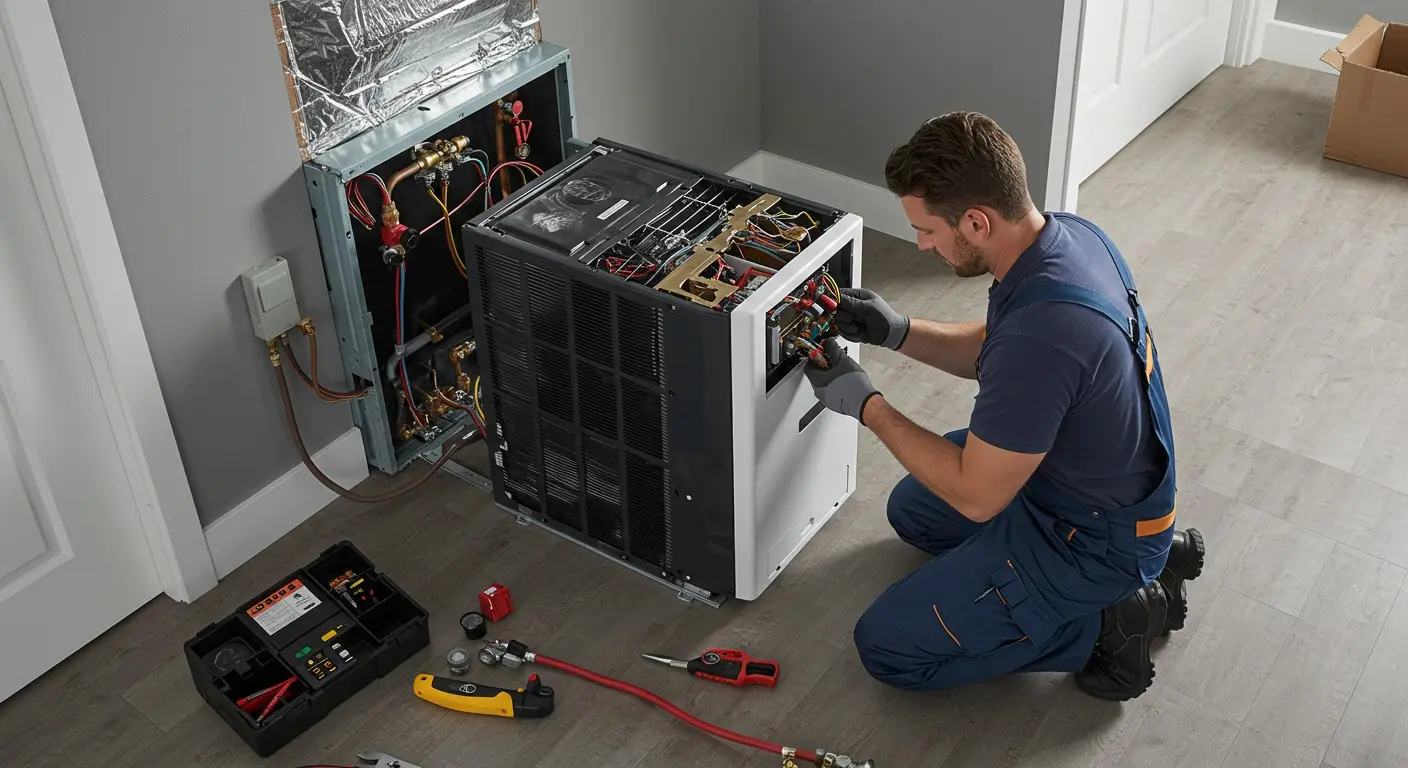
• Schedule professional maintenance: The defrost sensors, reversing valve, and backup heat strips must be tested by a technician. Scheduling heating maintenance in Boyd ensures these critical automated defenses are fully operational.
No, you should never cover an active heat pump during the winter. A heat pump must pull in massive amounts of outdoor air to extract heat for your home. Covering the unit suffocates the system, causing severe airflow restriction, overheating, and eventual compressor failure.
The defrost cycle works by temporarily reversing the flow of refrigerant, turning the outdoor unit into a hot condenser. The outdoor fan stops spinning to allow heat to build up inside the housing, which quickly melts frost and light ice off the metal coils before normal heating operation resumes.
If your unit is entirely encased in solid ice, immediately switch your thermostat to "Emergency Heat" or "Aux Heat" to stop the outdoor unit from running. Allow the ice to melt naturally as the weather warms, and never use sharp tools or hot water to force the ice off the sensitive metal fins.
You cannot safely run a heat pump if it is heavily encased in solid ice that the defrost cycle cannot manage. Running the system with frozen fan blades or completely blocked coils will cause severe centrifugal imbalance, potentially burning out the fan motor or destroying the compressor.
Yes, what looks like smoke is actually steam rising from the unit during its normal defrost cycle. When the hot refrigerant melts the frost off the cold coils, it creates a visible plume of water vapor, which is a sign that the system's automated defenses are working correctly.
For residents in Boyd, TX and surrounding North Texas areas, the safest way to melt heavy ice is to let the ambient temperature rise and melt it naturally. If the unit is an idle AC condenser, simply leave it turned off at the breaker until the storm passes and the ice thaws completely.
Understanding how severe weather mechanically impacts your condenser is the key to maintaining a warm, safe home. By distinguishing the needs of idle air conditioners from active heat pumps, you can avoid the dangerous mistakes that lead to mid-winter breakdowns. Trusting your system's built-in defrost cycle to handle light frost is essential, but knowing exactly when to shut the system down during continuous late fall and winter sudden freezes will ultimately protect your investment from catastrophic damage. Taking proactive steps today ensures that when the freezing rain inevitably arrives, you are relying on a prepared, well-maintained system rather than hoping for the best. By implementing these strategies for protecting outdoor hvac units from freezing rain, you secure your home's comfort through the harshest weather the season has to offer.


Stay comfy with 0% Financing for 12 Months on a new HVAC system through Synchrony and Wisetack! No hidden fees, no stress—just easy payments.