Blogs
Stay updated with our latest blog posts.


Is your Springtown home's ductwork leaking your cold air, leaving your air conditioner running for hours while the living room stays uncomfortably warm? Are you constantly checking the thermostat, wondering why the temperature never drops to where you set it? This is a common frustration for homeowners during July peak summer heat. You hear the compressor humming outside, the blower motor is pushing air through the vents, yet the house feels like an oven. At Family Comfort Heating & Air, our team typically sees homeowners make the immediate assumption that the equipment itself is failing. Most people assume the system is low on refrigerant, the compressor is dying, or the unit is simply too old to keep up with the extreme Texas weather.
Here is the reality we uncover daily on local service calls: your equipment might be working perfectly fine. Before you pay for repeated refrigerant checks or start shopping for a brand-new unit, you have to consider the delivery system. The conditioned air your system works so hard to cool might be leaking directly into your unconditioned attic space before it ever reaches your living room. The decision point comes down to this: do you keep treating the symptoms at the mechanical unit, or do you evaluate the pathways carrying that air?
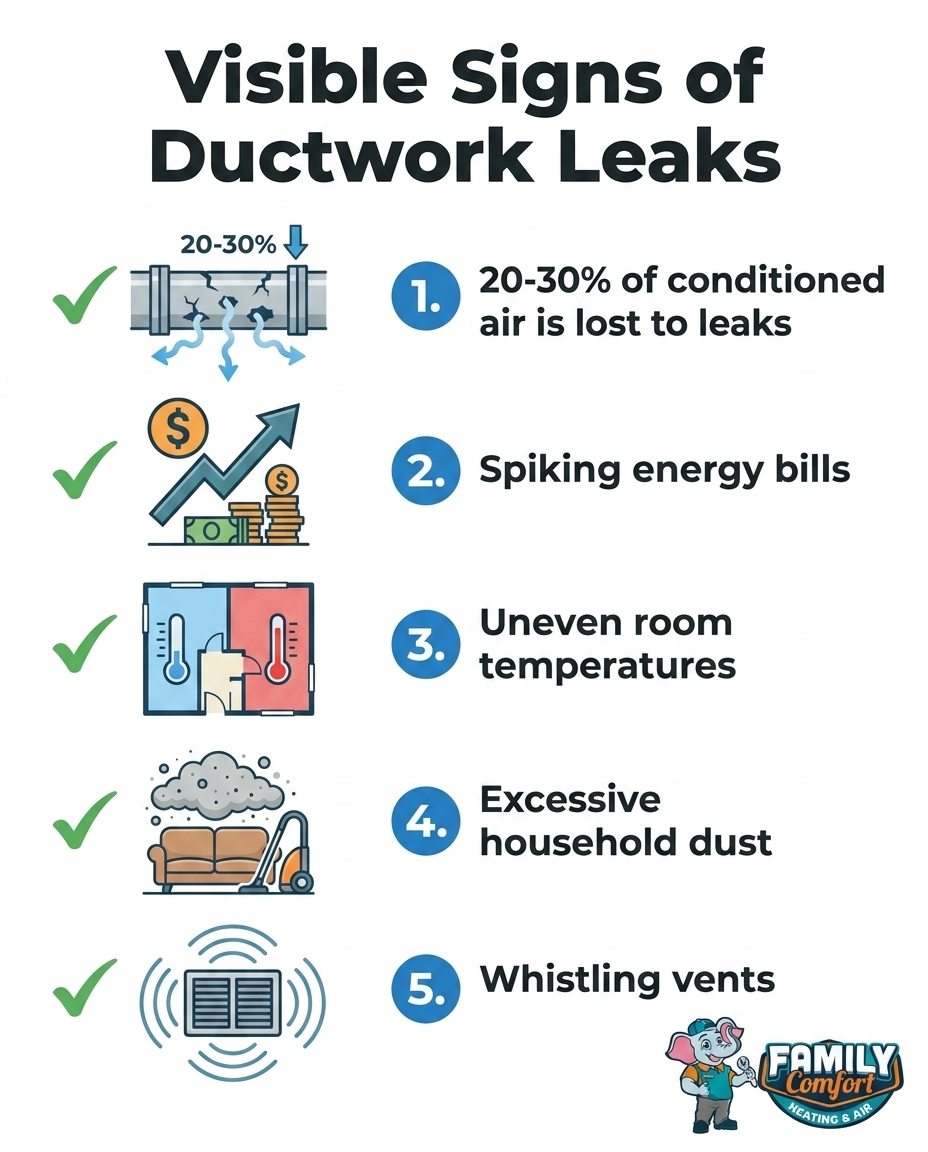
According to the Department of Energy's ENERGY STAR program, up to 30 percent of the cooled air moving through a typical home's duct system is lost due to leaks, holes, and poorly connected joints. That means for every unit of cooling your system produces, nearly a third of it is wasted. A comprehensive approach to Air Conditioning requires looking at both the mechanical equipment and the ductwork that distributes the comfort.
To understand why duct leaks are so destructive to your home's comfort, you have to look at the environment where most ductwork lives. In our experience providing HVAC services across the Springtown and Boyd TX area, we know firsthand that attics are incredibly hostile spaces during the summer months. While the outside temperature might read 102 degrees, the radiant heat beating down on your roof shingles turns your attic into an oven. It is common for attics in the local area to easily reach 130 to 140 degrees during peak summer afternoons.
Now, consider the physics of your cooling system. Your indoor air handler is trying to push 55-degree conditioned air through flexible tubes suspended in that 140-degree environment. Pumping cold air through an unconditioned space requires completely sealed and heavily insulated pathways. The thermal contrast is extreme. If there is even a small gap, tear, or disconnected joint in that pathway, the highly pressurized cold air escapes immediately into the superheated attic.
Worse still, the system does not just lose cold air. The laws of pressure mean that if air is escaping out of the supply ducts, the return ducts might be pulling air in. A leak on the return side actively sucks that 140-degree, dusty, fiberglass-filled attic air directly into your HVAC system, forcing your equipment to try and cool incredibly hot air instead of the milder air from inside your home. This compounds the system's workload exponentially.
The urgency of addressing this during peak heat cannot be overstated. One local family with toddlers experienced this firsthand during the middle of July when extreme heat left them without adequate cooling for a week. The system was running non-stop, but the house remained hot until expedited service identified the root cause and restored their comfort. If you are dealing with a struggling system, scheduling AC Repair in Springtown is the first step to pinpointing whether the attic environment has compromised your ductwork.
One of the most expensive myths in home cooling is the belief that replacing the outdoor unit or the indoor air handler will automatically resolve all airflow and temperature issues. Homeowners often upgrade to a high-efficiency system, expecting their summer comfort problems to disappear, only to find the new unit struggles just as much as the old one.
Your air conditioning unit is essentially the engine of your home's comfort system. The ductwork is the delivery method. If you buy a high-performance engine but attach it to a degraded, leaking delivery system, you completely negate the performance of the new equipment. Pushing efficiently cooled air through compromised, uninsulated, or leaking attic ducts during July peak summer heat means that expensive new system is just cooling your attic faster.
An undersized or degraded duct system will actually choke a new unit. Modern high-efficiency systems rely on precise airflow calculations to operate correctly. If the ducts are leaking, the system cannot maintain the proper pressure. This often leads to short-cycling (where the unit turns on and off rapidly) or continuous running without ever satisfying the thermostat.
• Warm air from vents — Likely Mechanical Issue: Low refrigerant or bad compressor — Likely Ductwork Issue: Return duct pulling in hot attic air
• Weak airflow in one room — Likely Mechanical Issue: Failing blower motor — Likely Ductwork Issue: Disconnected or crushed duct branch
• System runs constantly — Likely Mechanical Issue: Dirty condenser coils — Likely Ductwork Issue: Conditioned air leaking into attic
• High humidity indoors — Likely Mechanical Issue: Oversized AC unit — Likely Ductwork Issue: Unsealed ducts pulling in outside moisture
Because these symptoms overlap so heavily, a full system evaluation is absolutely necessary before making major investments. If you are considering an AC replacement, the existing ductwork must be inspected to ensure it can actually handle the output of the new equipment.
While locating the exact source of a duct leak in a dark, hot attic requires professional diagnostic tools, there are several visible symptoms you can safely identify from inside your living space. If you notice these warning signs in the Springtown / Boyd TX area, your delivery system is likely compromised.
• Spiking energy bills: If your electricity usage jumps significantly compared to previous summers, despite keeping your thermostat at the exact same setting, your system is working overtime to compensate for air lost in the attic.
• Uneven home cooling: Pay attention to the temperature differences between rooms. If the master bedroom is freezing but the guest room furthest from the indoor unit remains uncomfortably warm, the duct run serving that warm room is likely leaking or crushed.
• Excessive household dust: If you find yourself dusting furniture only to see a new layer accumulate a day later, your return ducts may be pulling dirty, dusty attic air into the system and blowing it throughout the house.
• Whistling or hissing noises: When the system is running, listen closely to your vents. A distinct whistling sound often indicates that pressurized air is forcing its way through a narrow gap or tear in the duct connection just behind the drywall.
If you observe multiple symptoms from this list, it is time to investigate further. Understanding why your AC vents are blowing warm air often comes down to tracing these exact physical signs back to a breach in the attic.
Ductwork is not a permanent, indestructible fixture in your home. It is an assembly of flexible materials, metal collars, adhesives, and insulation, all of which degrade over time. The mechanics of this degradation are directly tied to the extreme thermal cycling that occurs in a Texas attic.
When homes are built, contractors use various materials to connect the flexible duct runs to the metal distribution boxes (plenums). Historically, standard duct tape or basic mastic sealants were used. However, standard cloth-backed duct tape dries out quickly in 140-degree heat. Over years of enduring July peak summer heat, the adhesive becomes brittle, turns to dust, and completely loses its grip. Older mastics can also harden and crack as the metal components expand in the summer and contract in the winter.
Once that initial adhesive seal breaks, the problem accelerates. The blower motor pushes conditioned air through the ducts under high pressure. When that pressurized air finds a crack in the dried-out mastic or failing tape, it forces its way out. Over months and years, this constant outward pressure pushes the gap wider and wider, until entire duct runs can completely detach from the distribution box, dumping 100 percent of their cold air directly into the rafters.
Even if the inner plastic liner of the duct remains sealed, the outer fiberglass insulation can fail. Over time, moisture, gravity, and extreme heat can cause the fiberglass wrapping around the ducts to compress or degrade. When insulation loses its thickness (its R-value), radiant heat from the attic easily penetrates the duct wall, warming the cold air inside before it ever reaches your bedroom.
Catching this material degradation early is critical. Routine AC maintenance should always include a visual inspection of the accessible ductwork to spot drying adhesives and sagging insulation before they lead to massive energy waste.
Not all HVAC service visits are created equal. A common pattern our technicians at Family Comfort Heating & Air see is homeowners receiving a "clean bill of health" from a generic maintenance visit, only to have their home remain uncomfortably hot the very next day. This happens because standard, generic tune-ups often only focus on the mechanical components sitting outside or in the garage.
A basic check will verify the compressor is pulling the right amperage, the coils are clean, and the refrigerant levels are adequate. But if the technician never climbs into the attic to inspect the ductwork connections, plenums, and branch runs, they are only doing half the job. Our localized expertise means understanding that in the Springtown / Boyd TX area, the attic environment is just as critical to evaluate as the condenser outside. True diagnostic work looks beyond the metal box to evaluate the entire thermal envelope of the home.
During a recent service call, a technician arrived on time to investigate a severe cooling issue where the equipment seemed fine but the house was hot. By taking the time to crawl the attic, they quickly found a major bad connection where a main trunk line had separated. Once the connection was properly resealed and secured, the ducts were confirmed to be blowing strong, cool air into the living spaces again. Finding and fixing a bad connection like this immediately restores both comfort and efficiency, ensuring you don't waste another summer cooling your rafters.
The most reliable indicators are uneven temperatures across different rooms and unexpected spikes in your energy bills. If your AC is running normally but certain rooms never cool down, or if you notice weak airflow coming from specific registers, a leak is highly likely. Additionally, an increase in household dust can signal that your return ducts are pulling dirty air from the attic or crawlspace.
Your system may be producing perfectly cold air, but duct leaks are depositing that air into the attic instead of your living room. The thermostat keeps calling for cooling because the room temperature hasn't dropped, forcing the unit to run continuously. The mechanical equipment is doing its job, but the delivery system is compromised.
According to ENERGY STAR data, typical homes lose 20 to 30 percent of their conditioned air to leaks, holes, and poor connections. When this happens during July peak summer heat, that percentage represents a massive amount of wasted energy and lost comfort. This loss forces your system to work significantly harder to achieve the same indoor temperature.
Yes, properly sealing ducts is one of the most effective ways to improve overall HVAC efficiency. By ensuring that 100 percent of the cooled air reaches your living space, the system can satisfy the thermostat faster and shut off sooner. This reduces run times, lowers energy consumption, and extends the lifespan of your compressor and blower motor.
Sustained extreme heat causes the adhesives, tapes, and mastics holding the ductwork together to dry out, become brittle, and fail. Furthermore, the intense radiant heat can degrade the outer fiberglass insulation over time. When the insulation compresses or the vapor barrier tears, the cold air inside the duct absorbs the surrounding attic heat before it reaches your vents.
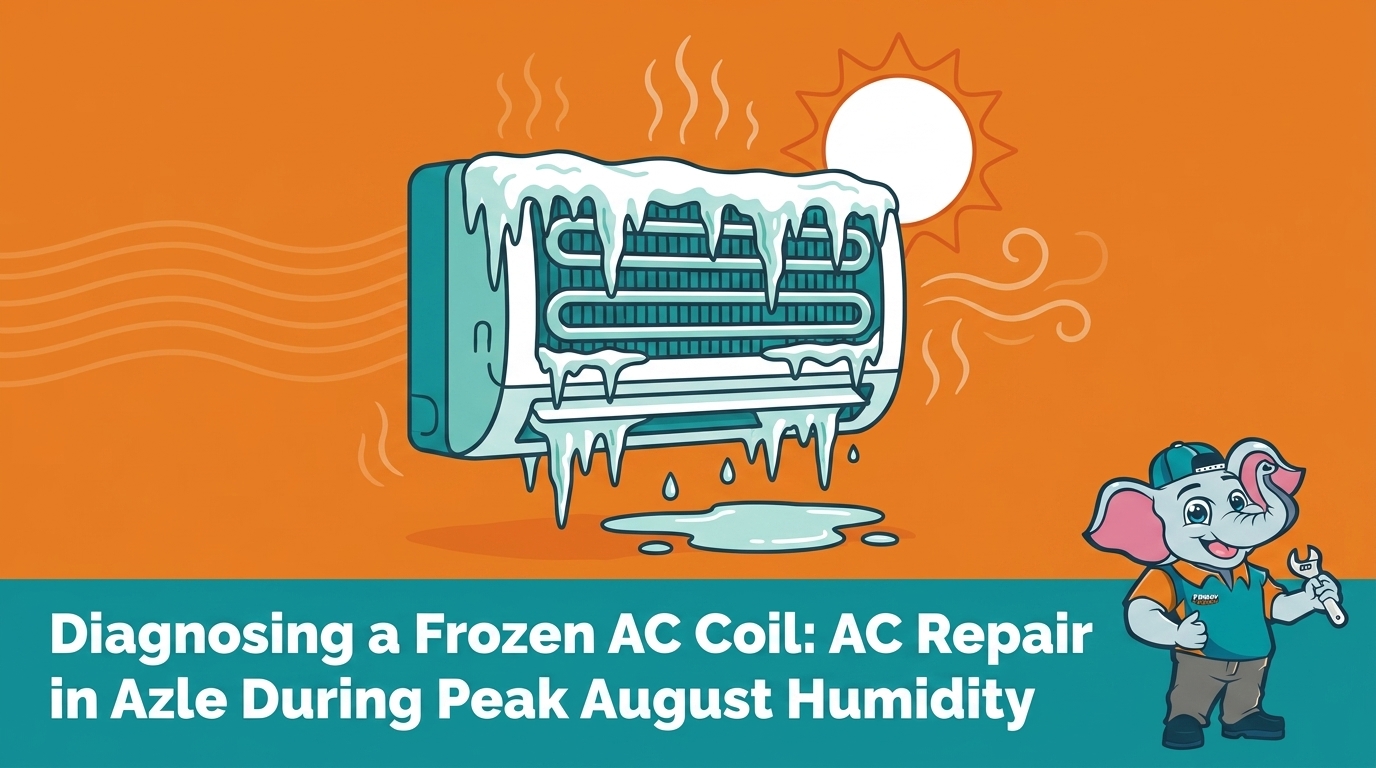
Severe duct leaks, particularly on the return side, can disrupt the proper volume of airflow crossing the indoor evaporator coil, which is a primary cause of system freeze-ups. If the system pulls in too much hot, humid air, or if supply leaks prevent adequate air circulation, condensation on the coil can rapidly turn to solid ice, shutting down your cooling entirely.
An underperforming air conditioner doesn't always mean you need a new compressor or a fresh charge of refrigerant. Often, a system that runs constantly without cooling the home points directly to a compromised delivery system hidden just above your ceiling. In the Springtown / Boyd TX area, intense summer heat takes a heavy toll on duct materials, turning minor gaps into major energy drains.
Sealing your ductwork is often the missing link to true home comfort. By keeping your conditioned air inside the living space where it belongs, you reduce the strain on your equipment and lower your monthly bills. Don't spend another summer paying to air condition your rafters. Schedule a professional whole-system evaluation today to identify hidden leaks, secure your connections, and finally get the dependable cooling your family deserves.


Stay comfy with 0% Financing for 12 Months on a new HVAC system through Synchrony and Wisetack! No hidden fees, no stress—just easy payments.