Blogs
Stay updated with our latest blog posts.


At Family Comfort Heating & Air, we routinely find that airway restrictions in older, degraded ductwork can reduce a home's cooling efficiency by up to 30%, which is exactly why understanding how we size AC units for older homes in Azle is so critical. You might notice that your air conditioner runs constantly during the peak summer heat, yet certain rooms never seem to reach a comfortable temperature. This is a concrete problem our team sees daily for anyone living in aging properties featuring compromised insulation and outdated structural designs. To ensure your property stays comfortable without wasting energy under heavy cooling loads, you need specialized Air Conditioning Services that look far beyond the basic footprint of the house.
Homeowners often face a difficult decision: rely on a standard sizing estimate provided by a contractor who just glances at the square footage, or invest in a customized evaluation that accounts for the unique thermal envelope of Azle historic and older builds. In our experience, the reality is that modernizing the comfort of these homes requires specialized HVAC expertise. Standard calculations simply cannot account for the drafts, settling, and original materials that define classic Texas architecture.
When you upgrade your cooling system, the goal is reliable, consistent comfort throughout the entire house. Achieving that requires a deep understanding of how air moves through older structures, where intense summer heat enters the living space, and how our technicians can match modern high-efficiency equipment with aging ductwork. Taking the time to evaluate these variables upfront prevents years of frustration and sky-high utility bills down the road.
Multiplying your home's square footage by a generic cooling factor is a fundamentally flawed approach for older properties. A pattern we see often is contractors assuming that every house is built to modern efficiency standards with tight seals and standardized insulation. If you are planning an AC installation in Azle, our installation experts warn that relying on floor space alone virtually guarantees an improperly sized system.
Many North Texas homes built decades ago feature pier-and-beam foundations and minimal original wall insulation. Unlike modern slab-on-grade builds that trap conditioned air efficiently, a suspended floor over a crawlspace introduces entirely different heat transfer dynamics. Hot summer air easily infiltrates through unsealed subfloors, while poor wall insulation allows the intense July sun to bake the interior rooms.
These historical construction methods drastically alter the home's thermal envelope. To understand just how different these structures are, consider the fundamental differences our team evaluates when determining how a home retains cooling:
• Foundation — Modern Slab-on-Grade Homes: Concrete slab, minimal under-floor heat transfer — Azle Historic and Older Builds: Pier-and-beam, high vulnerability to drafts and heat gain
• Wall Insulation — Modern Slab-on-Grade Homes: High R-value fiberglass or spray foam — Azle Historic and Older Builds: Settled, degraded, or entirely absent original materials
• Air Tightness — Modern Slab-on-Grade Homes: Sealed building envelope with vapor barriers — Azle Historic and Older Builds: High natural ventilation, leaky window frames, drafty floors
• Duct Placement — Modern Slab-on-Grade Homes: Conditioned spaces or highly insulated attics — Azle Historic and Older Builds: Unconditioned crawlspaces or poorly ventilated hot attics
Because the thermal envelope is so compromised, an older home of the exact same square footage as a new build will require a completely different cooling capacity. We frequently see systems sized purely on square footage either running nonstop trying to overcome the heat gain, or severely oversized in an attempt to compensate, leading to a host of other mechanical and indoor air quality issues.
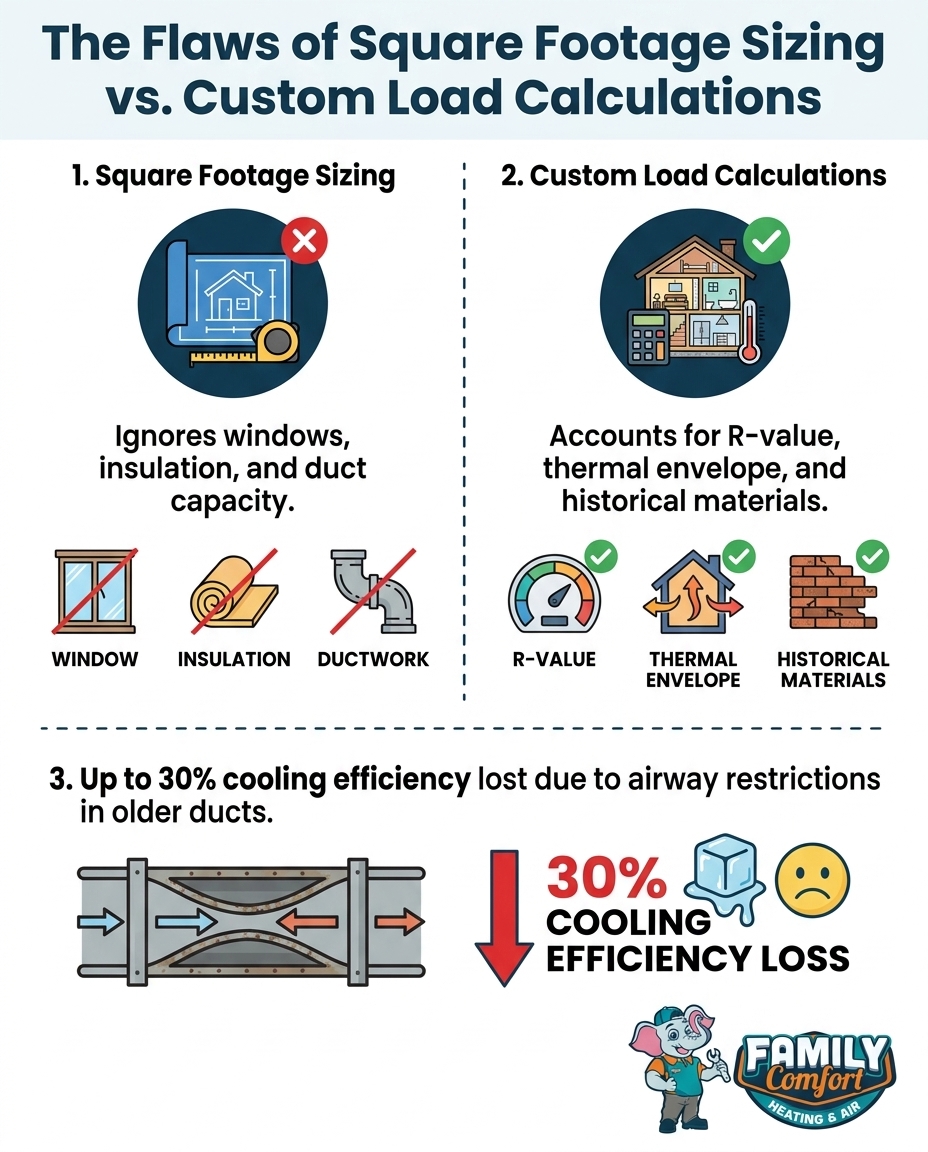
To properly size a system for an aging property, our HVAC professionals at Family Comfort Heating & Air use precise cooling load calculations based on ACCA Manual J standards. This process evaluates dozens of specific variables inside your home to determine exactly how much heat needs to be removed on the hottest days of the year. When our team evaluates Azle historic and older builds, four critical factors take priority:
• Ductwork capacity: Assessing the physical limitations and airway restrictions of 50-plus-year-old ducts. Older ducts were often designed for lower-capacity systems, meaning they cannot handle the high-velocity airflow of modern air conditioners without significant static pressure issues.
• Window quality and age: Evaluating single-pane glass and historical framing for heat gain. Original wood-framed, single-pane windows offer almost no resistance to solar radiation, drastically increasing the cooling load in west- and south-facing rooms during peak afternoon heat.
• Wall and attic insulation levels: Measuring the actual R-value present in the home's barriers. Insulation degrades and settles over decades. What was installed in 1970 no longer provides the same thermal resistance today, requiring our technicians to physically inspect the attic and wall cavities.
• Thermal envelope integrity: Identifying drafts, leaks, and overall structural airtightness. Visual inspections reveal how much conditioned air escapes through unsealed baseboards, original doors, and chimney flues.
By measuring these exact variables, our technicians can perform accurate cooling load calculations rather than guessing based on floor space. This structured breakdown ensures the new unit matches the actual physical realities of your property.
One of the most significant mechanical conflicts our crews face during an AC replacement in an older home is the mismatch between new equipment and old air distribution systems. Modern, high-efficiency AC systems require specific, high-volume airflow to operate correctly under heavy summer loads. They are designed to move a large amount of air across an indoor coil to maximize energy efficiency and heat transfer.
However, the historical ductwork found in many aging homes was designed under entirely different standards. Forcing high-velocity air from a modern variable-speed blower through undersized, rigid metal ducts causes immediate problems. The system experiences high static pressure—essentially acting like a person trying to breathe through a tiny straw. This causes excessive noise at the vents, strains the blower motor, and drastically shortens the lifespan of the new equipment.
We see the effects of aging ductwork frequently. Recently, a local homeowner reached out during a brutal heatwave because their system was running but hardly any air was coming out of the vents. Our technician evaluated the setup, found a bad connection in their older duct system, and repaired it in under an hour. Once the restriction was cleared, the ducts were immediately blowing cold air again. In our experience, without assessing the entire distribution system, even a brand-new AC unit will fail to cool the house.
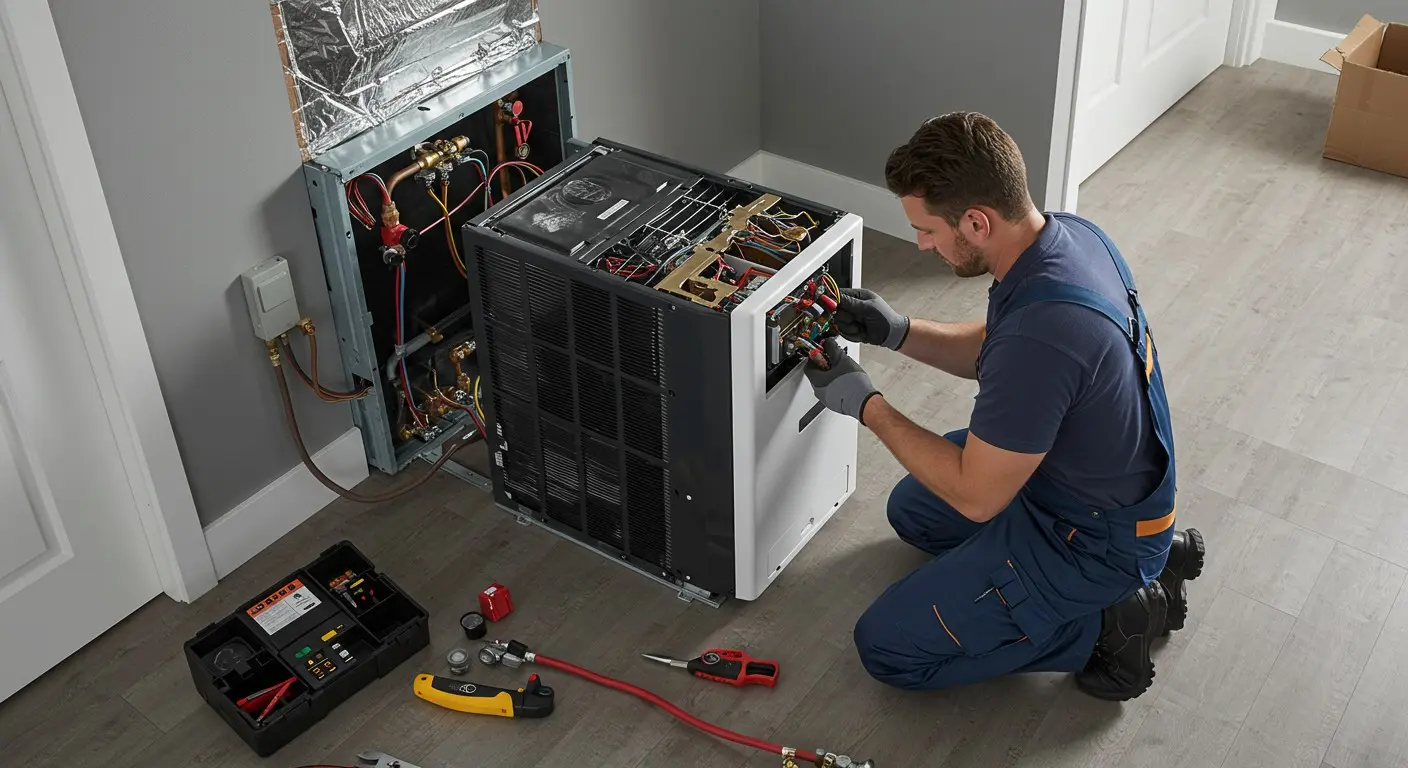
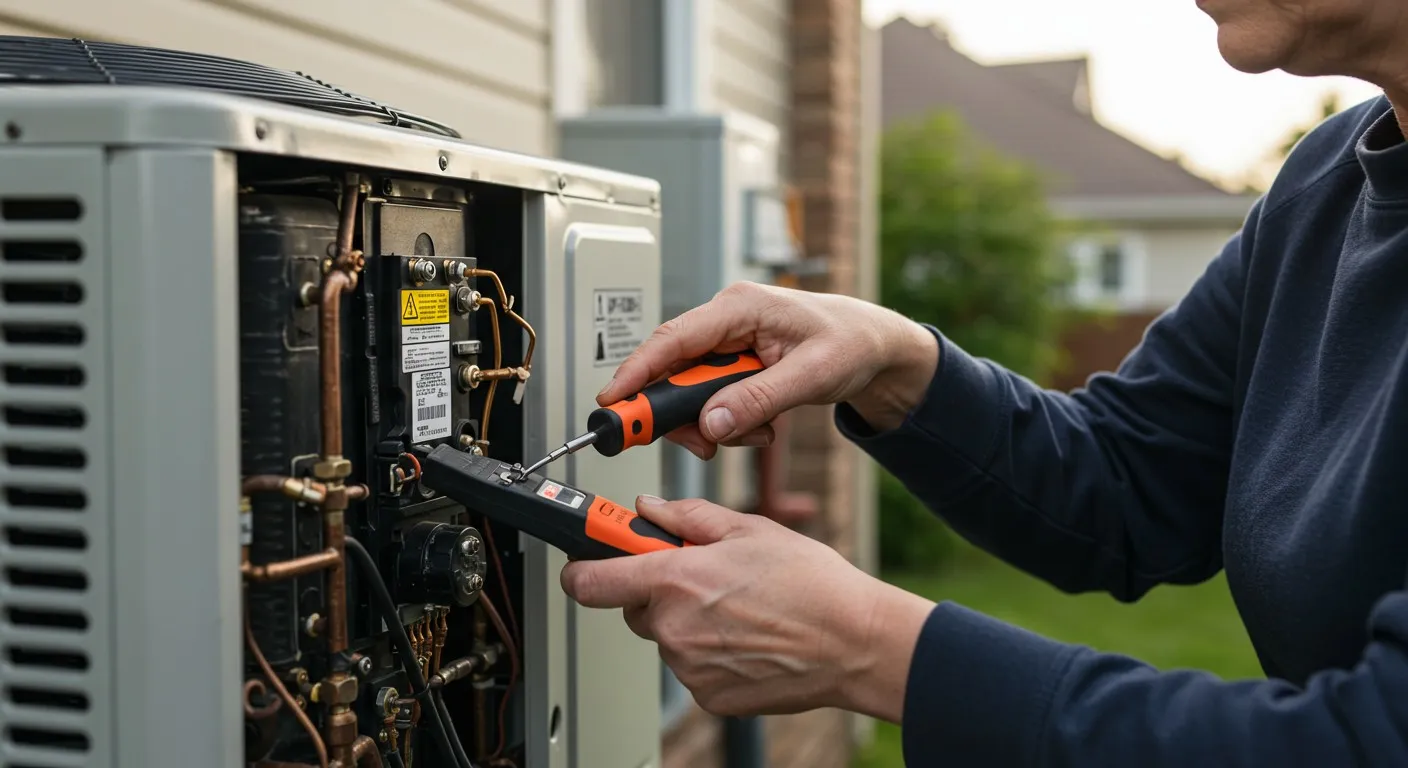
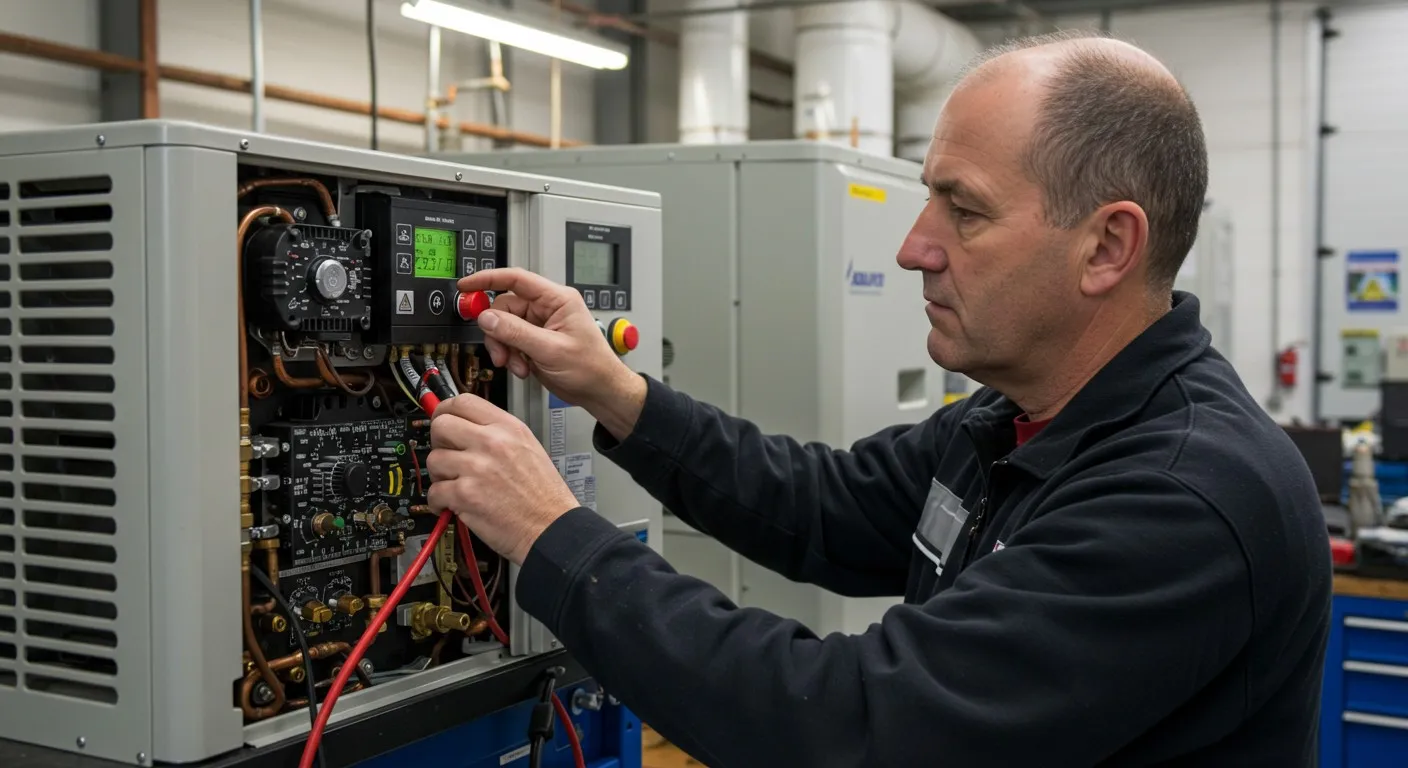
Determining if your ductwork requires modification before a new unit is installed involves careful measurement. Our technicians look for specific signs of static pressure imbalance, such as whistling return grilles, doors that slam shut when the AC kicks on, or hot spots in rooms furthest from the blower. By measuring the existing duct capacity using specialized manometers, we can determine exactly how much air the current system can handle. If the old ducts cannot support the required cooling load calculations for the new unit, we will recommend targeted duct modifications or resizing to ensure the system breathes properly.
A common misconception we hear from homeowners is that "bigger is better" when it comes to air conditioning. If an older home struggles to stay cool, the immediate reaction is often to install a unit with a higher tonnage rating. In reality, oversizing an AC unit is one of the worst mistakes you can make, particularly during the intense July heat and high humidity we experience in North Texas.
When you install a unit that is too large for the home's actual cooling load calculations, it leads to short-cycling. Short-cycling occurs when an oversized unit blasts the rooms with cold air, dropping the temperature rapidly, and then shuts off before completing a full, standard cooling cycle. While the air temperature drops quickly, the system does not run long enough to perform its second, equally important job: dehumidification.
To understand why this matters, you have to look at the difference between sensible cooling and latent cooling. Sensible cooling is the actual drop in temperature you read on the thermostat. Latent cooling is the removal of moisture (humidity) from the air. Extracting extreme summer moisture takes time. The air must pass over the cold evaporator coil continuously for at least 15 to 20 minutes to wring the humidity out of the indoor environment.
If an oversized unit short-cycles in a drafty older home, it leads to a cold, clammy indoor environment. The air feels heavy, indoor air quality plummets, and you might even notice condensation on windows or a musty smell. Our emergency service dispatchers have seen firsthand how critical prompt, properly sized cooling is. Recently, a family with toddlers was left without AC for a week in the middle of the July heat. We expedited their service, properly diagnosed the sizing issues, and got their home back to a safe, comfortable state quickly. Getting the sizing right through Proper AC Sizing For Optimal Home Cooling ensures the unit runs long enough to extract extreme summer moisture, protecting both your comfort and your home's interior.
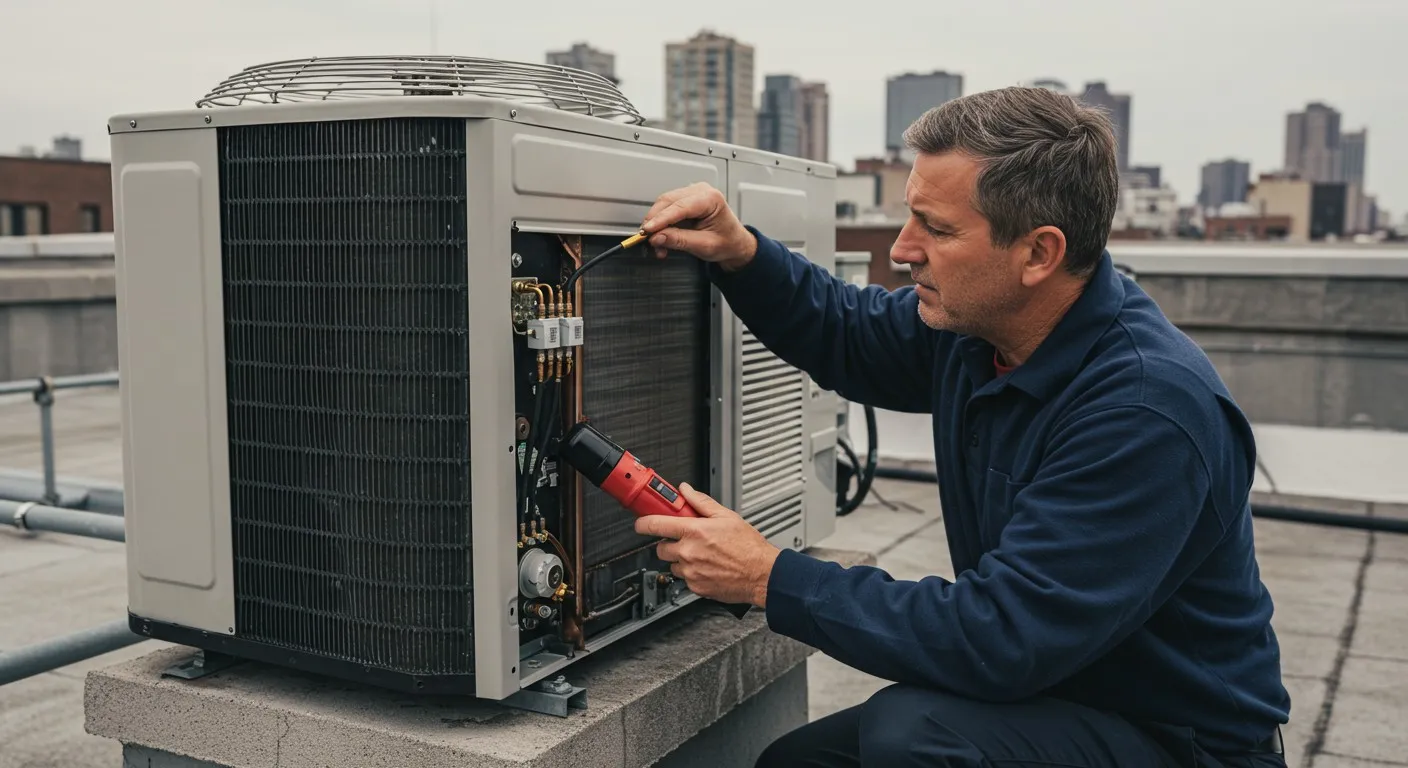
Establishing true comfort in an aging property requires more than just swapping out a metal box in the backyard. Family Comfort Heating & Air takes a meticulous, customized approach to sizing, explicitly rejecting lazy rule-of-thumb estimates to guarantee the right fit for unique architectural challenges. We execute proper ACCA Manual J standards on every project, ensuring no detail is overlooked.
During our evaluation, our technicians assess the specific orientation of the home, noting which rooms take the brunt of the afternoon sun. We account for the shading provided by mature trees, the historical materials used in the siding and roof, and the exact volume of the living spaces. We input all of these variables into our cooling load calculations to generate a precise requirement for sensible and latent heat removal.
We also believe in transparent communication. Upgrading an HVAC system in an older home involves complex mechanical interactions, and you deserve to understand exactly what is happening in your house. This past spring, a homeowner who lacked technical knowledge about AC systems asked us to evaluate their setup. Our technician took the time to explain the entire process clearly, ensuring the customer felt fully informed and confident about their cooling system before any work began. Taking the time to measure correctly and explain our findings protects your long-term investment and guarantees the system will perform exactly as promised.
Once our team installs a perfectly sized system, the work does not stop there. Even the most accurately measured and expertly installed units in Azle historic and older builds require regular tuning. Older homes continue to experience structural settling, and aging ductwork can develop new leaks or restrictions over time.
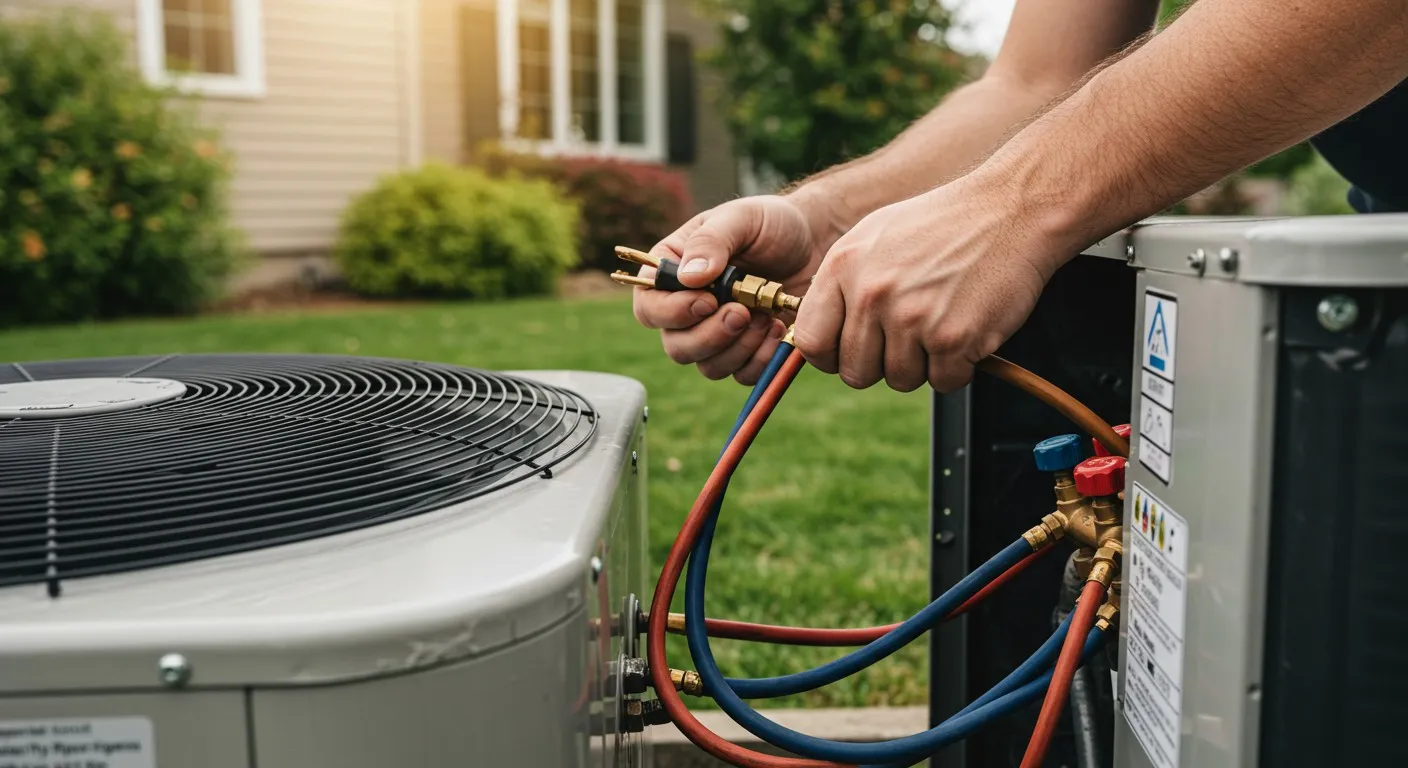
Scheduling routine AC maintenance is the best way we know to account for these ongoing changes. Seasonal check-ups allow our technicians to measure static pressure, inspect the duct seals, and ensure the blower motor is moving the correct volume of air. This proactive care maintains optimal latent heat removal, ensuring your home stays dry and comfortable during the peak summer humidity.
Furthermore, regular tune-ups prevent efficiency loss over the lifespan of the equipment. A system that struggles against newly developed airway restrictions will draw more electricity and wear out its components faster. By keeping the system clean and calibrated, you protect your investment and maintain the precise balance our team achieved during the initial custom sizing process.
Our team calculates AC size using an ACCA Manual J load calculation, which measures the home's specific thermal envelope. This process evaluates the quality of the insulation, the age of the windows, the integrity of the ductwork, and the home's orientation to the sun. By using exact measurements rather than guessing, we determine the precise cooling capacity required for historical architecture.
In our experience, sizing an AC based solely on square footage ignores the actual heat gain of the property. Older homes typically have poor insulation, drafty single-pane windows, and unsealed pier-and-beam foundations, meaning they require a different cooling capacity than a modern, airtight home of the same size. Relying on floor space guarantees an improperly sized unit that will either short-cycle or run continuously.
Poor insulation allows outside heat to penetrate the living space rapidly, significantly increasing the required cooling load calculations. If the walls and attic lack adequate thermal resistance, the AC must work harder to overcome the constant influx of hot Texas air. Our proper sizing evaluation accounts for this degraded insulation to ensure the new unit has the capacity to keep up on the hottest days.
We typically find that short-cycling occurs because the air conditioning unit is too large for the home's thermal envelope. The oversized system blasts cold air and drops the indoor temperature so quickly that the thermostat shuts the system off before it can remove humidity from the air. This results in a cold but clammy indoor environment and puts excessive wear and tear on the compressor.
Yes, ductwork size is critical to the performance of a new AC system. Modern high-efficiency units require a specific volume of airflow to operate properly, and forcing that air through small, 50-year-old ducts creates severe static pressure. If our technicians find that the existing ducts are undersized or heavily restricted, they must be modified or replaced to prevent blower motor failure and airflow issues.
Yes, you can install modern central air in a historic house, but it requires careful planning and customized engineering. Our technicians evaluate the existing structural cavities to see if traditional ductwork will fit, or if modifications are needed to accommodate modern airflow requirements. In some cases, we use specialized distribution systems designed specifically to integrate seamlessly into older architectural styles.
Older homes demand a specialized sizing approach rather than simple square-footage estimates. The unique architectural features, from pier-and-beam foundations to original wood-framed windows, drastically alter how heat moves through the living space. By accounting for insulation gaps and the physical limitations of aging ductwork, Family Comfort Heating & Air ensures your new system delivers reliable, efficient comfort.
You do not have to settle for hot spots, high humidity, or skyrocketing energy bills. Speak with our local experts who understand the nuances of Azle historic and older builds to assess your property's specific needs. We are here to provide a clear explanation of why your older home needs a specialized sizing approach, giving you the confidence that your new AC will cool your house perfectly for years to come.


Stay comfy with 0% Financing for 12 Months on a new HVAC system through Synchrony and Wisetack! No hidden fees, no stress—just easy payments.