Blogs
Stay updated with our latest blog posts.


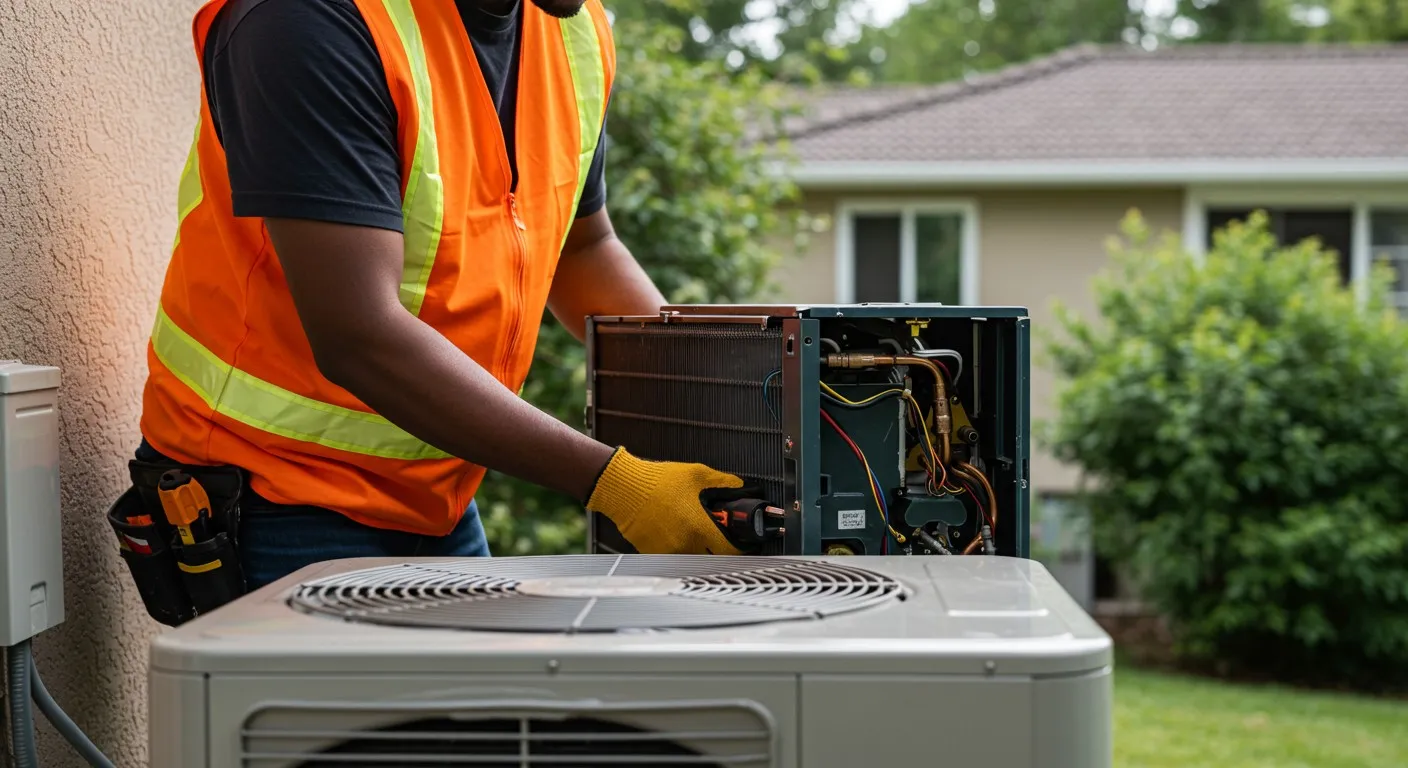
Knowing exactly When an AC Breakdown is Actually Just a Bad Breaker can save you from immense stress when your thermostat reads 80 degrees, the indoor fan is blowing warm air, and the outdoor condenser unit goes completely silent. When you walk outside to check on the equipment, there is no hum, no fan movement, and no sign of life. For most homeowners, a completely dead outdoor unit triggers immediate panic. The immediate assumption is that the compressor has suffered a catastrophic failure, meaning a massive, unexpected expense is right around the corner.
This fear is completely understandable. The compressor is the heart of your cooling system, and when it fails, the entire unit stops cooling. However, an unresponsive unit is frequently caused by a localized electrical fault, not a mechanical death. During the peak summer cooling season, electrical components work overtime, and a simple power interruption will shut down the outdoor equipment instantly. Before you assume the worst, it is crucial to understand that your system might just be starving for electricity.
If you find yourself staring at a silent condenser, reaching out for professional AC repair in Boyd is the best way to determine whether you are dealing with a simple power loss or a true mechanical breakdown.
To the untrained eye, a bad circuit breaker perfectly mimics a dead compressor. When the outdoor unit receives zero voltage from the electrical panel, it behaves exactly as it would if the internal motor were completely destroyed. It sits there, silent and unresponsive.
At Family Comfort Heating & Air, our team frequently encounters this exact scenario. One local homeowner reached out to us on a Sunday during triple-digit temperatures when their system stopped completely. Our technician AJ arrived Monday morning and had the AC working within an hour—because the issue wasn't a dead compressor, but a localized electrical fault. This identical presentation is exactly why misdiagnoses are so common in the HVAC industry.
Your central air conditioning system is actually split into two halves that operate on separate electrical circuits. The indoor air handler runs on a standard 120-volt circuit, while the outdoor condenser requires a heavy-duty 240-volt circuit to power the compressor and the outdoor fan.
Because they are on separate circuits, the indoor blower might continue running perfectly fine, circulating warm, unconditioned air through your vents. Meanwhile, the outside condenser remains entirely silent.
• Indoor fan blowing warm air — If the Compressor is Dead: Yes — If the Breaker is Bad: Yes
• Outdoor fan not spinning — If the Compressor is Dead: Yes (often) — If the Breaker is Bad: Yes (always)
• No humming sound from unit — If the Compressor is Dead: Yes — If the Breaker is Bad: Yes
• System unresponsive to thermostat — If the Compressor is Dead: Yes — If the Breaker is Bad: Yes
As the table shows, the symptoms overlap perfectly. A lack of power looks exactly like a lack of mechanical function.
The psychological impact of a sudden failure during extreme heat cannot be overstated. When the house is warming up fast, homeowners are vulnerable. Assuming the worst when the condenser fan and compressor both fail to engage is a natural reaction.
However, this perfectly mirrored set of symptoms is where the danger lies. A simple electrical disruption requires replacing an inexpensive electrical part. A dead compressor requires a highly costly mechanical replacement. Knowing the difference between the two protects your wallet during the peak summer cooling season.
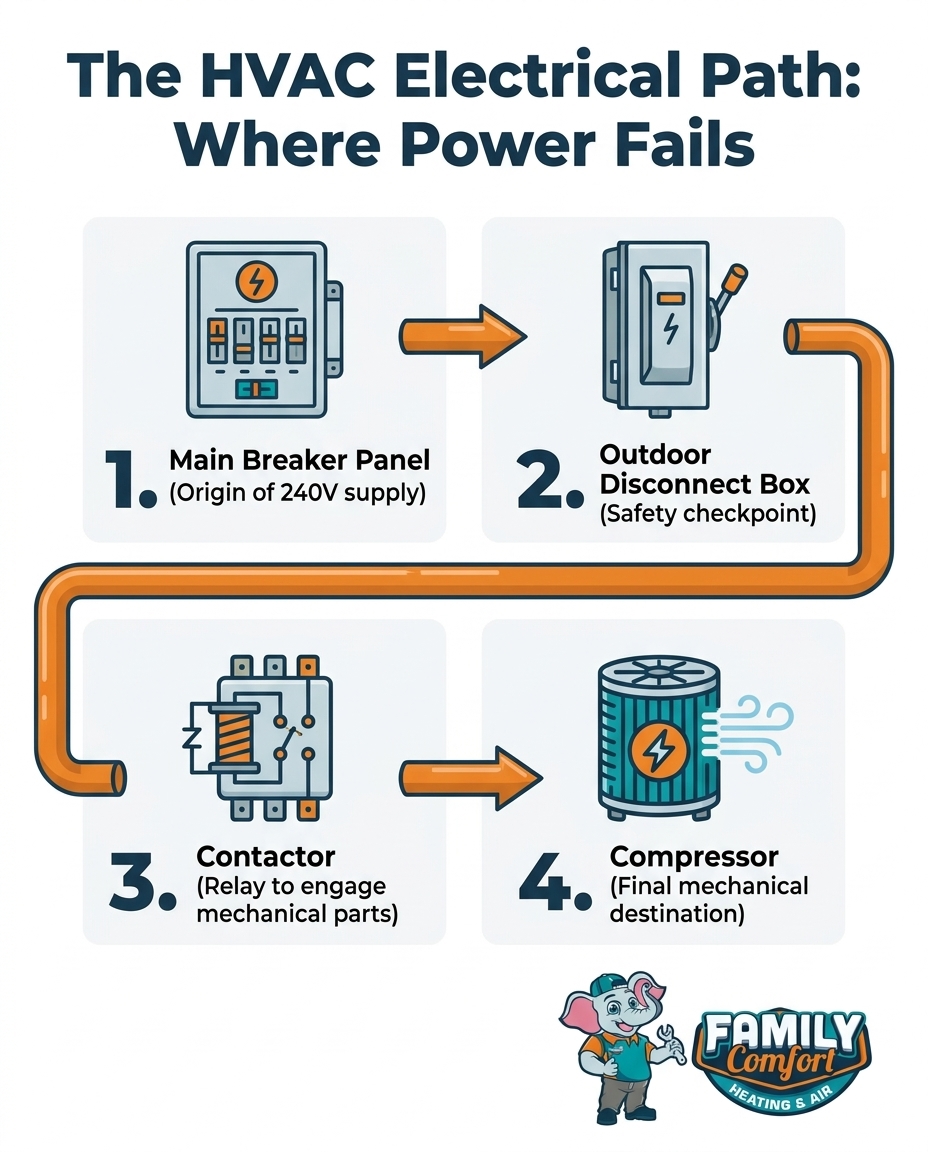
To understand why a breaker issue looks like a dead AC unit, you have to follow the journey of electricity. Power does not just jump from the street to your compressor; it travels through a series of checkpoints. A failure at the very beginning of this path stops everything downstream. If you ever need to fix an AC tripping the circuit breaker, understanding this path is the first step.
The origin of the 240-volt supply is your home's main electrical panel. Dedicated HVAC circuits are installed here because air conditioners draw a massive amount of electricity upon startup. The double-pole breaker in this panel is the gatekeeper. If this breaker fails to send power forward, the rest of the system remains dark, no matter how healthy the mechanical parts are.
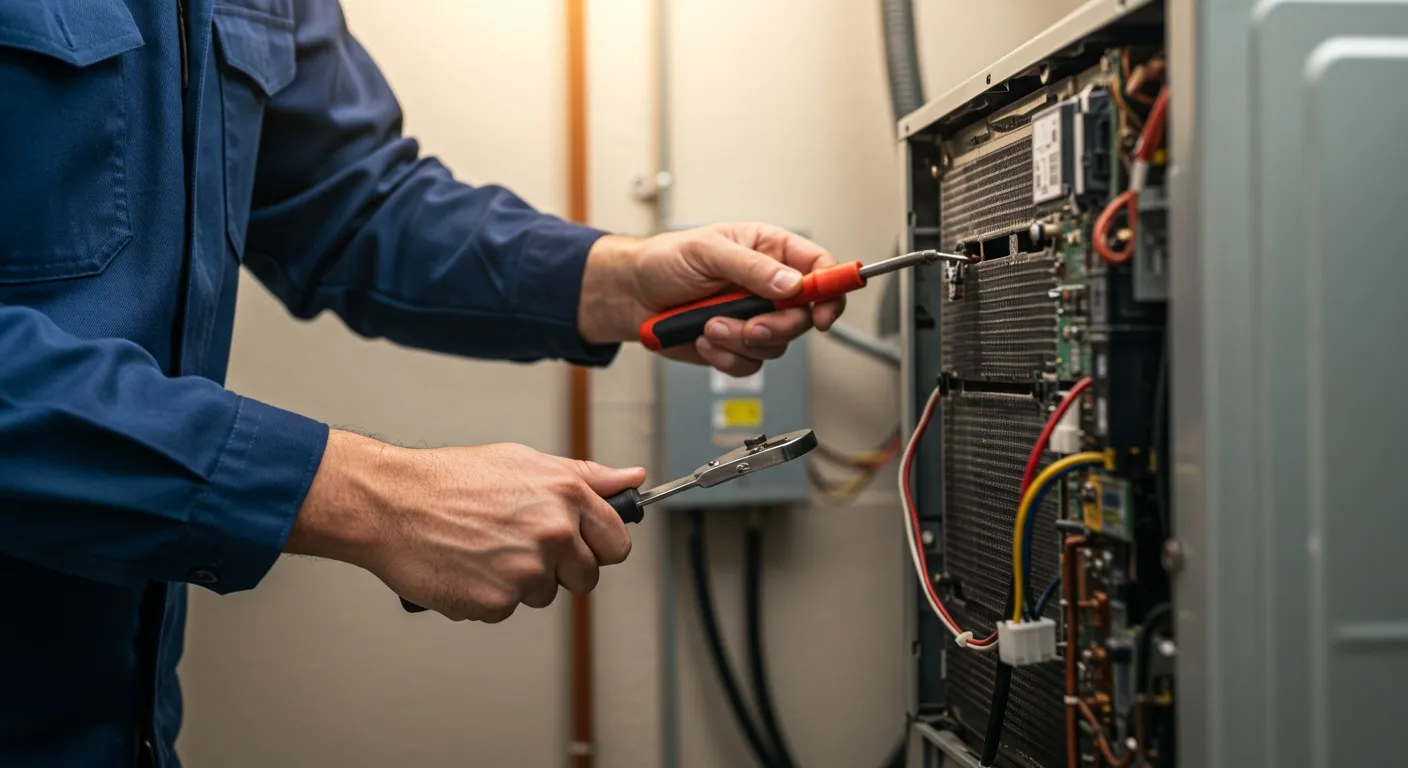
Once power leaves the main panel, it travels outside to a small metal box mounted on the wall near the condenser. This is the outdoor disconnect box. It serves as a critical safety checkpoint, allowing technicians to cut power locally before working on the unit. Many disconnect boxes contain physical fuses or a pullout block. If a fuse blows here or the connection degrades, the power journey ends inches away from the AC unit.
If power successfully makes it past the disconnect box, it enters the AC unit and hits the contactor. The contactor is an electrical relay—a mechanical switch controlled by your indoor thermostat. When the thermostat calls for cooling, the contactor snaps shut, allowing the high-voltage electricity to finally reach the fan motor and the compressor. The capacitor sits nearby, providing an extra jolt of stored energy to help the heavy motors start.
For Boyd TX homes, understanding this sequence proves one simple fact: if the main breaker fails at Step 1, the compressor at Step 3 never even gets the chance to turn on.
Most homeowners believe that if a breaker is bad, the physical switch will be flipped to the middle or "off" position. This is a dangerous misconception. Circuit breakers degrade over time due to continuous thermal cycling under heavy loads, and they can completely fail to deliver voltage even if the switch remains firmly in the "on" position.
Intense summer heat places maximum continuous demand on the HVAC system and the home's electrical panel, making electrical component fatigue a highly common point of failure. The National Electrical Code (NEC) outlines strict guidelines regarding dedicated circuits precisely because of these heavy HVAC electrical loads.
Inside a standard circuit breaker, there is a bimetallic strip that bends as it heats up. When too much current flows through the circuit, the strip bends far enough to trip the breaker and cut the power.
During the peak summer cooling season, your AC turns on and off dozens of times a day. Every time the compressor starts, it pulls a massive surge of electricity, heating up the components inside the breaker. Over years of use, this constant expansion and contraction of metal components causes fatigue. Eventually, the breaker loses internal tension. The contacts inside may burn, pit, or separate entirely, resulting in a loss of internal connection even though the plastic handle hasn't moved.
Because the internal components fail out of sight, visual inspections of the breaker box are entirely insufficient. You cannot simply look at a breaker to determine if it is sending 240 volts to your air conditioner.
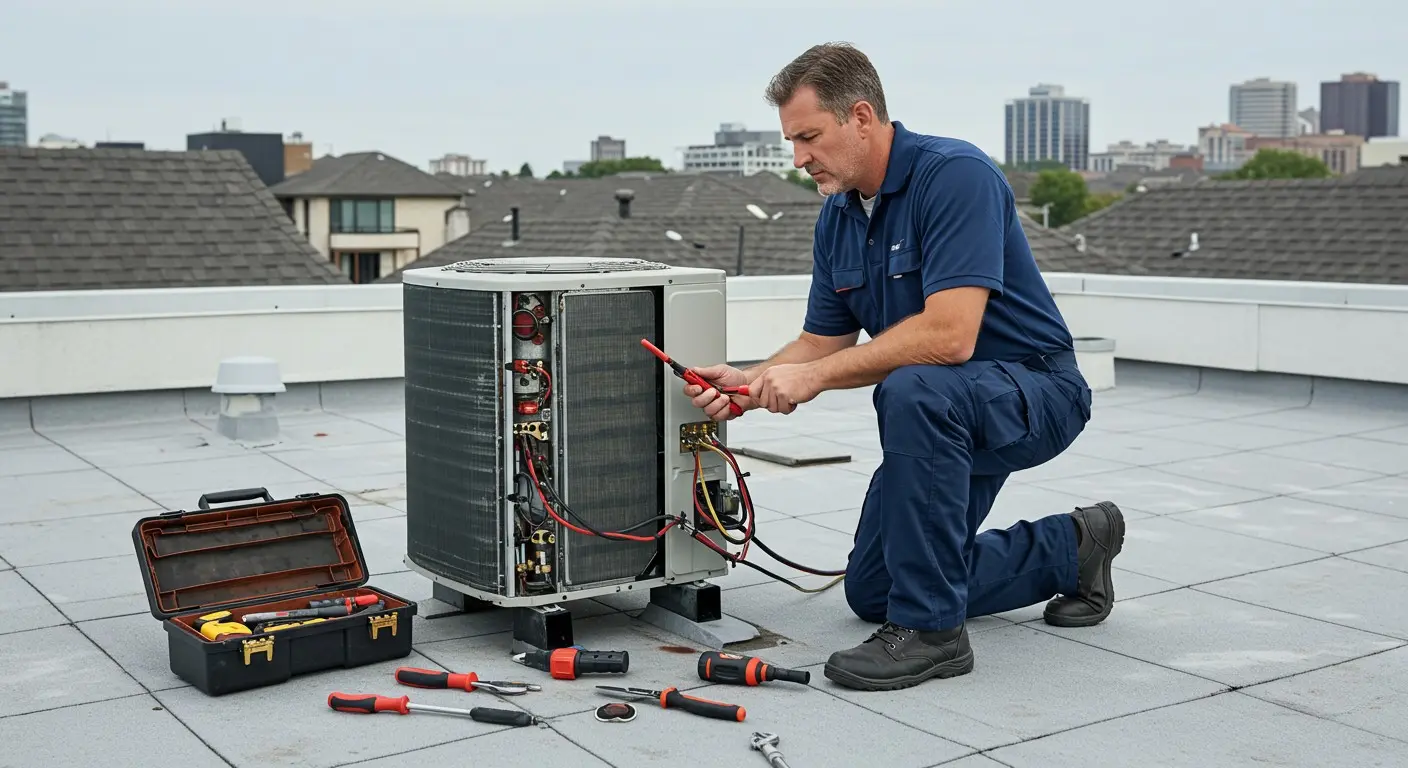
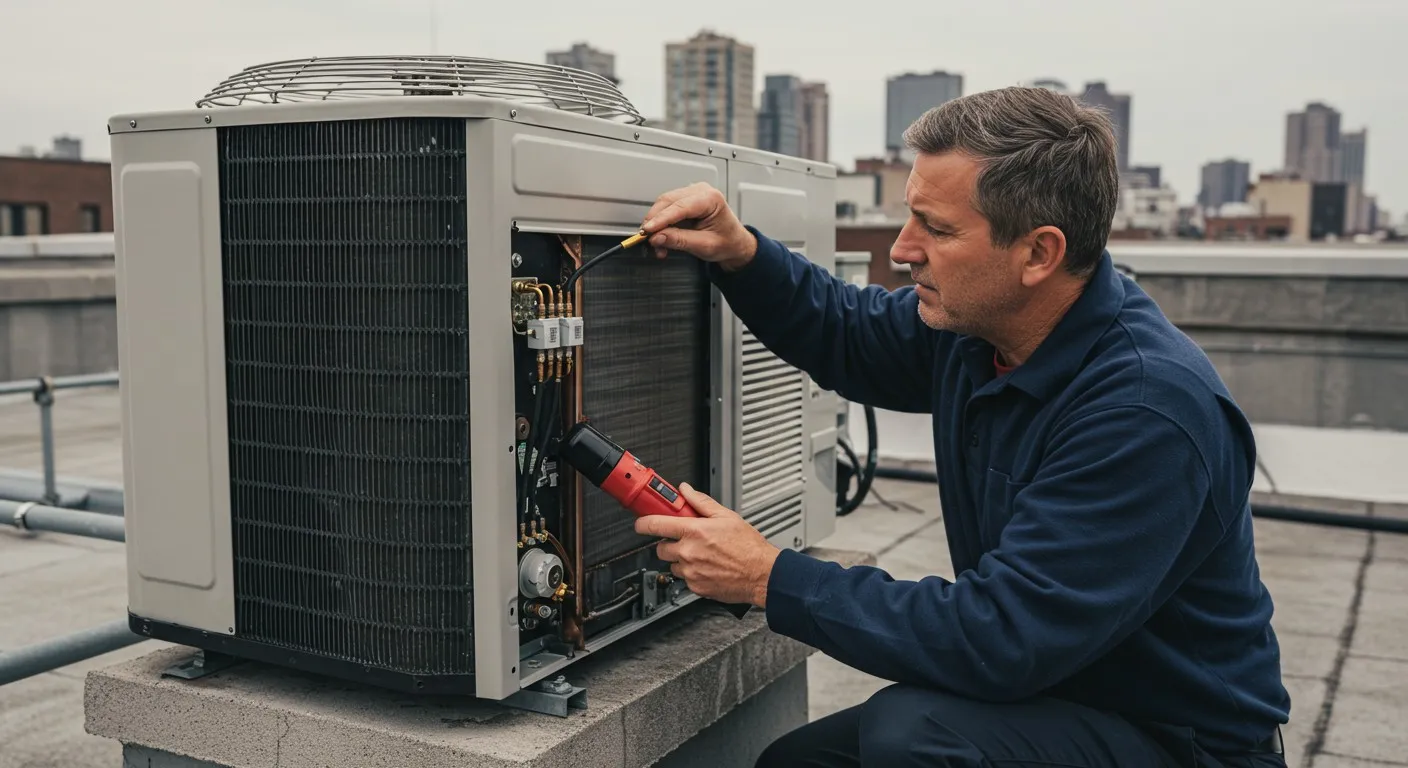
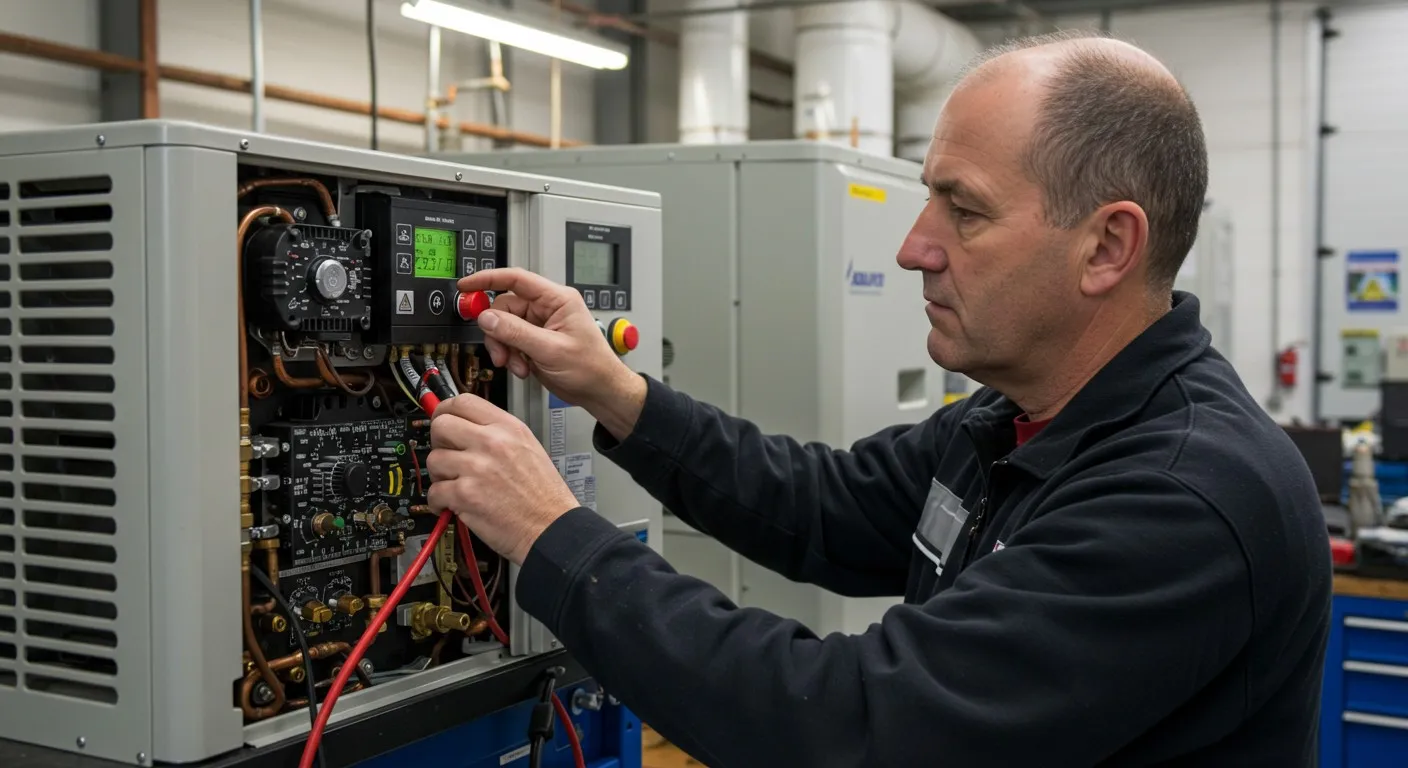
The only way to verify that a breaker is functioning correctly is by measuring the actual voltage output with a professional multimeter. If a technician simply looks at the panel, sees the breaker is "on," and assumes the power supply is fine, they are missing the most critical step in the diagnostic process.
When an HVAC technician arrives at a home with a completely dead condenser, their diagnostic routine dictates what happens next. If a technician assumes the compressor is dead without physically testing the electrical supply, the homeowner is in danger of a predatory replacement quote.
During a recent peak-summer service call, our team thoroughly assessed a system suffering from an electrical issue that was affecting the entire AC system. By taking the time to test the electrical path first, we identified the root cause and addressed it without unnecessary mechanical work. Skipping a basic multimeter check at the breaker is a primary way homeowners face unnecessary replacements.
There is often a rush to condemn an older system. If your AC is more than ten years old and the outdoor unit is completely silent, a dishonest or hurried technician might take one look, declare the compressor dead, and hand you a quote for a brand new system.
How the lack of a simple voltage check changes the entire diagnosis is staggering. Without testing the electrical path, it is impossible to know if the compressor has failed mechanically or if it is simply sitting in the dark waiting for power. The ethical responsibility of a technician is to rule out power supply issues first, every single time.
In our years of providing AC repair for Boyd TX homes, we've found that thorough diagnostic processes matter immensely. The difference between replacing an inexpensive electrical part at the panel and funding a costly mechanical system replacement is massive.
• The honest path: Testing the breaker, finding zero voltage, replacing the breaker, and restoring the AC for a minor service fee.
• The skipped-step path: Assuming the compressor is dead, condemning the whole unit, and pushing a full system replacement that you did not actually need.
When searching for "ac repair near me," you must prioritize companies that follow strict, step-by-step electrical testing procedures.
You do not need to be an electrician to protect yourself from a misdiagnosis. You simply need to know which questions to ask. Empowering yourself with specific questions ensures your technician is performing an honest, thorough diagnostic.
Honest diagnostics mean looking for the true root cause, ensuring the homeowner is saved from unnecessary mechanical replacements. If a technician tells you that your compressor is dead and the entire system needs to be replaced, ask them these specific questions:
• "Did you test continuity at the breaker and the disconnect box?" This forces the technician to confirm they checked the power supply before condemning the mechanical parts.
• "Is the system receiving proper voltage from the main panel?" The answer should be a specific number (typically around 240 volts), not a guess.
• "Can you show me the multimeter reading at the contactor?" A trustworthy technician will gladly walk you through these electrical readings and show you the meter.
• "Are the fuses in the outdoor disconnect box still good?" This ensures they didn't overlook a simple blown fuse outside.
• "Did you test the dual run capacitor?" A dead capacitor will stop a compressor from starting, mimicking a total failure.
If the technician becomes defensive or admits they did not check the electrical panel, it is highly recommended that you get a second opinion before agreeing to a major replacement for Boyd TX homes.
While it is vital to understand how the electrical path works, you should never attempt to test these high-voltage circuits yourself. We strongly advise against homeowners using multimeters on live 240V HVAC circuits due to extreme shock hazards.
Resetting a tripped breaker once is acceptable. If the breaker trips immediately again, or if the system remains dead, do not keep resetting it. Repeated tripping or opening the electrical panel requires a professional. Routine AC maintenance includes checking these electrical connections safely, preventing sudden failures during the peak summer cooling season.
The electricity powering your air conditioner is not the same as the electricity powering your living room lamps. Lethal voltage levels are present in the disconnect box and the main panel.
The quick fix: Leave the multimeter in the toolbox. YouTube tutorials are incredibly dangerous for electrical diagnostics because they cannot account for the specific wiring quirks, degraded insulation, or grounding issues present in your specific home. One slip of a metal probe inside a live 240-volt panel can cause severe injury or an arc flash.
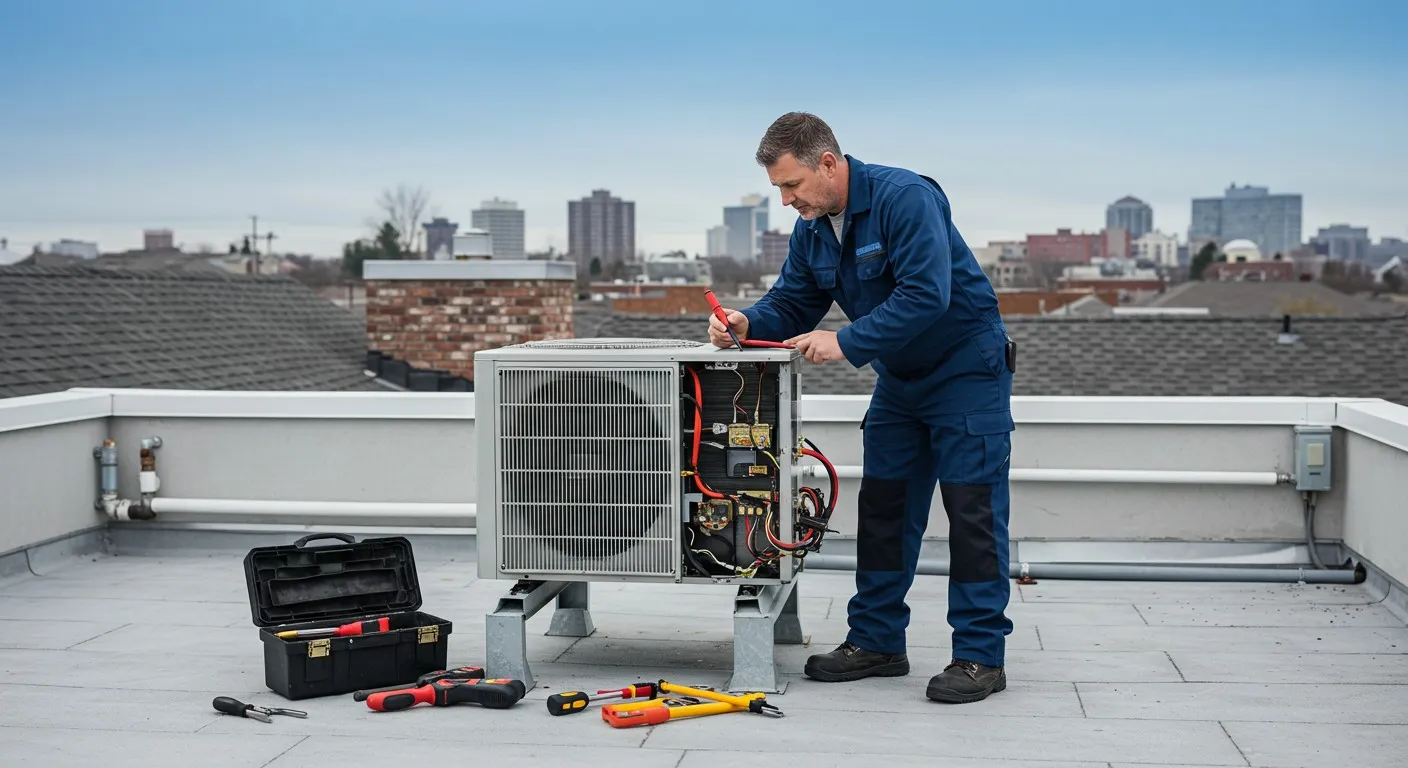
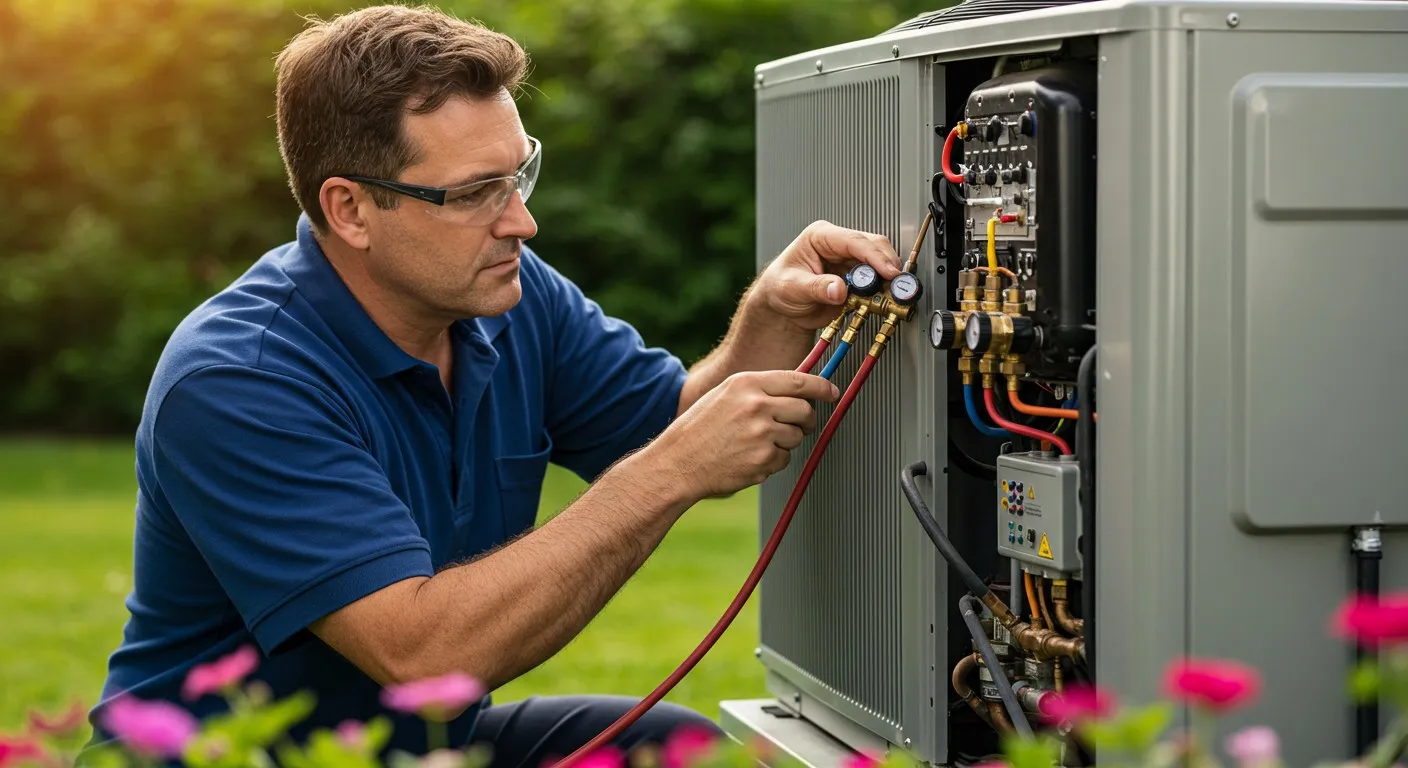
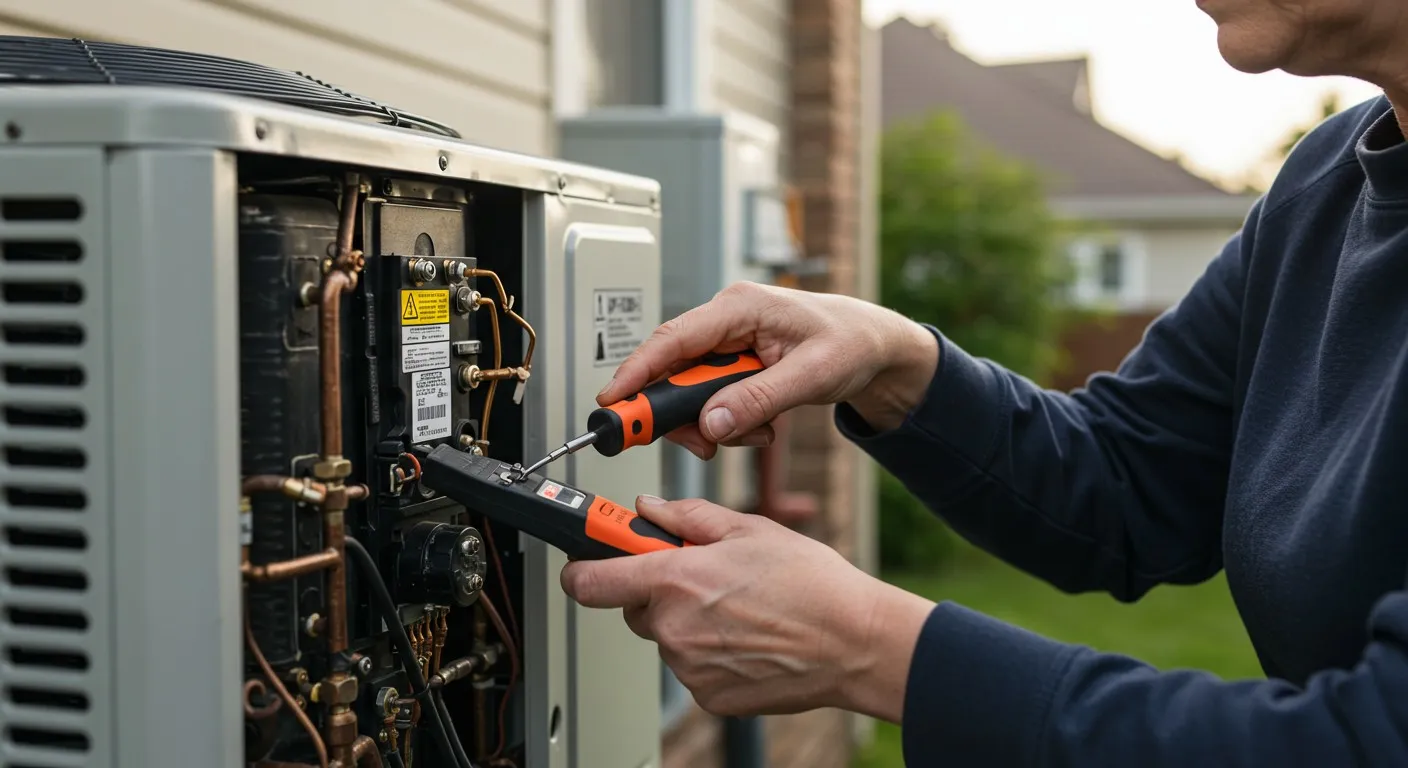
When a licensed technician arrives to diagnose a silent AC unit, they follow strict safety protocols.
• Calibrated tools: They use professional-grade multimeters designed to handle high-voltage spikes safely.
• Safe isolation: They know exactly how to safely isolate circuits before testing continuity, ensuring power is cut before touching bare wires.
• Load testing: Once power is restored, they test the amp draw of the compressor to ensure the new breaker won't simply trip again due to a struggling motor.
A professional inspection protects both your safety and the integrity of your cooling equipment.
The most reliable way to know if an AC breaker is bad is through a professional multimeter test showing zero voltage output while the switch is in the "on" position. Physical signs can include a breaker that feels loose, refuses to click firmly into place, or feels unusually hot to the touch. However, many bad breakers show no visual symptoms at all.
Yes, a bad breaker will absolutely prevent the outside AC unit from turning on. Because the breaker is the starting point for the 240-volt electrical path, a failure at the panel means the outdoor condenser receives zero electricity, leaving it completely silent and unresponsive.
A tripped breaker is a functioning safety device that has successfully cut power to protect the circuit from an overload or short. A bad breaker is a component that has mechanically or electrically failed; it may fail to trip when it should, or it may fail to deliver power even when reset. Both require professional attention for Boyd TX homes.
Symptoms of an AC disconnect box failure are identical to a breaker failure: the indoor unit runs, but the outdoor unit does nothing. Inside the box, a technician might find blown fuses, melted wires, or corroded pullout contacts caused by moisture and electrical arcing.
If your AC breaker feels hot and refuses to reset, the internal bimetallic strip is likely warped from excessive thermal cycling or an active electrical short. Forcing a hot breaker to reset is extremely dangerous and can cause an electrical fire. Leave it off and call a professional immediately.
A completely dead outdoor AC unit is frightening, but it does not automatically mean your compressor is destroyed. As we have seen, a localized electrical fault perfectly mimics a catastrophic mechanical failure. The key to protecting your wallet during the peak summer cooling season is insisting on a comprehensive continuity test.
You have the right to ask questions and verify that the power supply was tested before accepting a quote for a new system. By reaching out to a trusted local professional who prioritizes finding the root cause over pushing a replacement, you can keep your air conditioning systems running efficiently. A clear, technical understanding of your HVAC electrical path ensures that a simple breaker issue never gets misdiagnosed as a dead compressor.


Stay comfy with 0% Financing for 12 Months on a new HVAC system through Synchrony and Wisetack! No hidden fees, no stress—just easy payments.